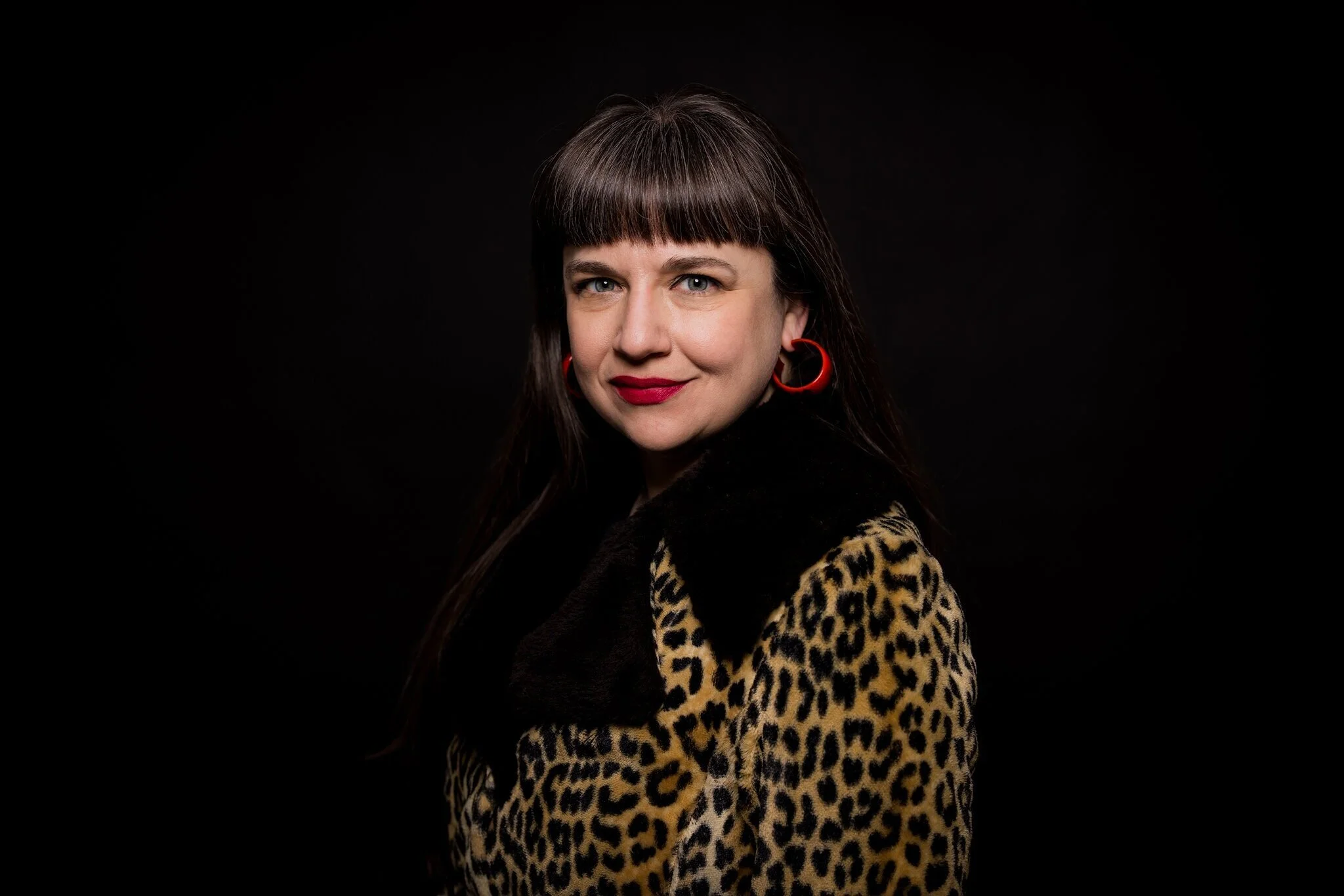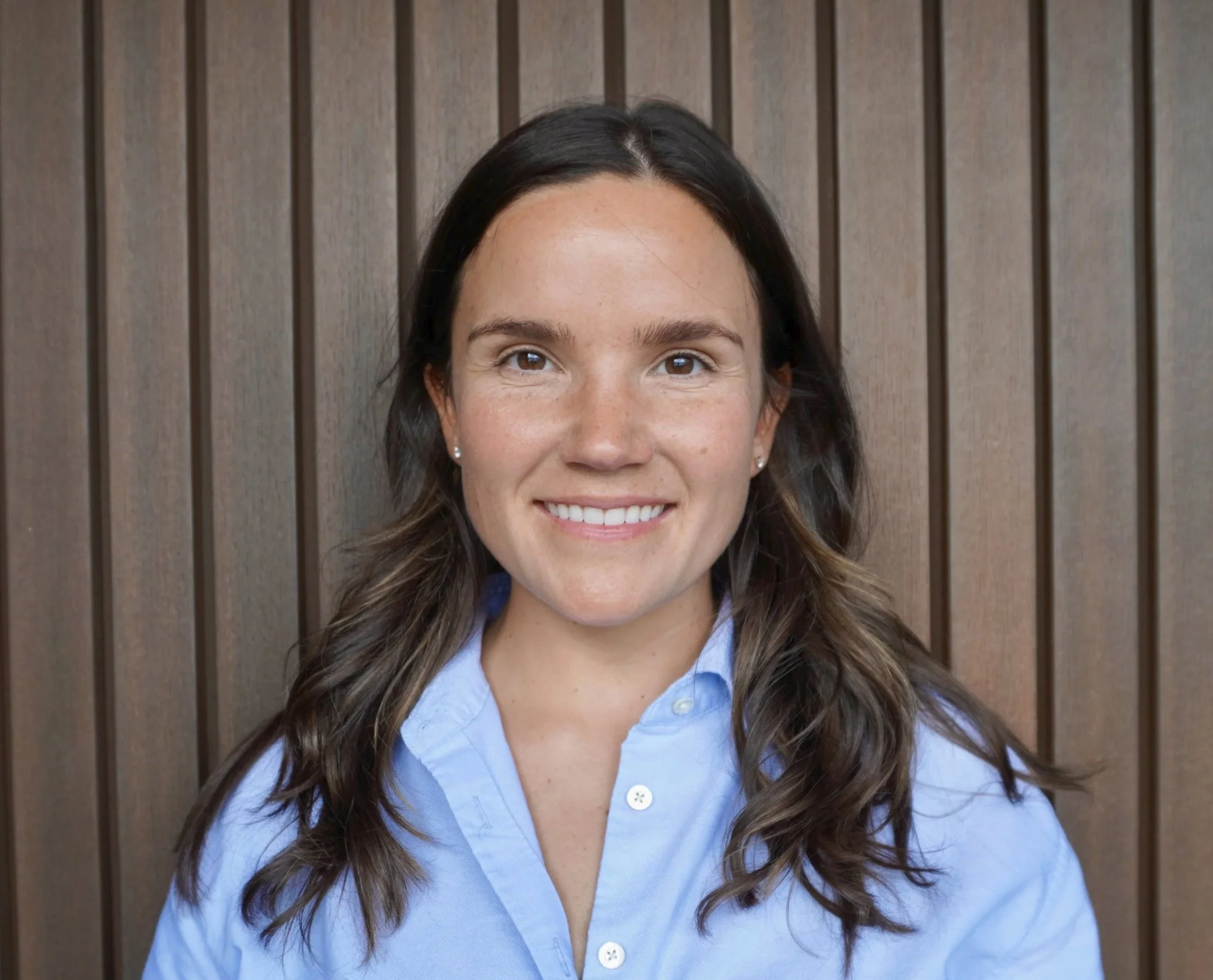
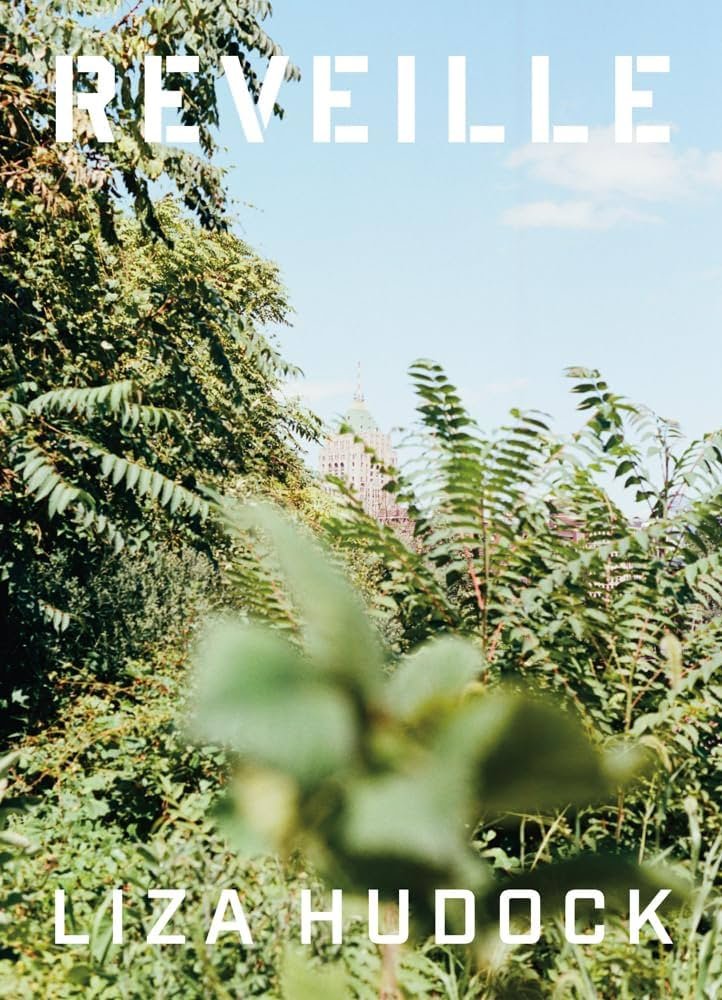
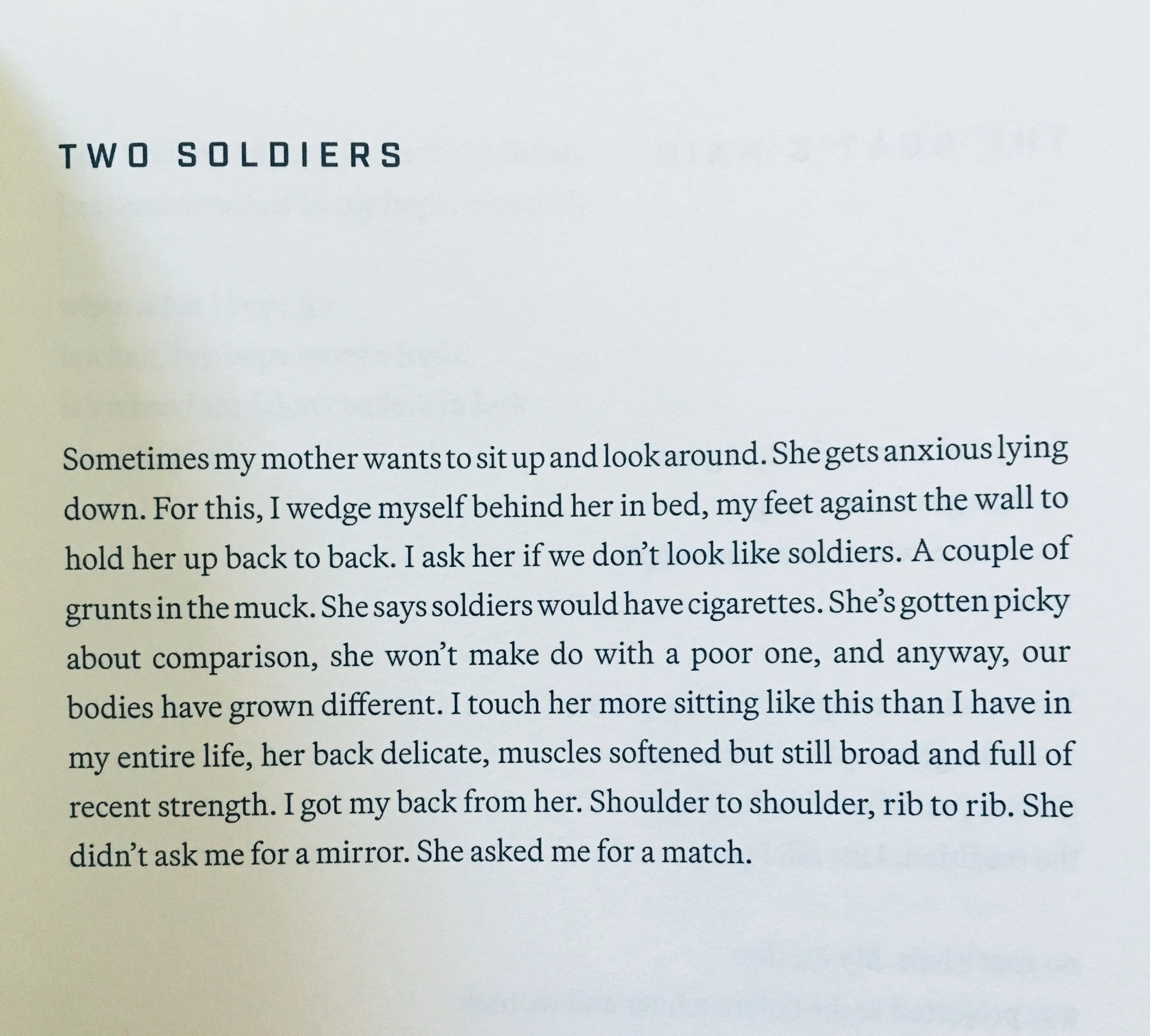
Detroit-based writer Liza Hudock’s Reveille is one of the best debut poetry collections I've ever read. The 2025 book (out with Chicago’s own Flood Editions) is full of life: the heavy shit, the reflective, the heartfelt, the honest, the tender. Through and through, it’s a great introduction. Some parts made me think of Mary Ruefle (high praise) and other parts felt so singularly unique. I can’t recommend this collection enough.
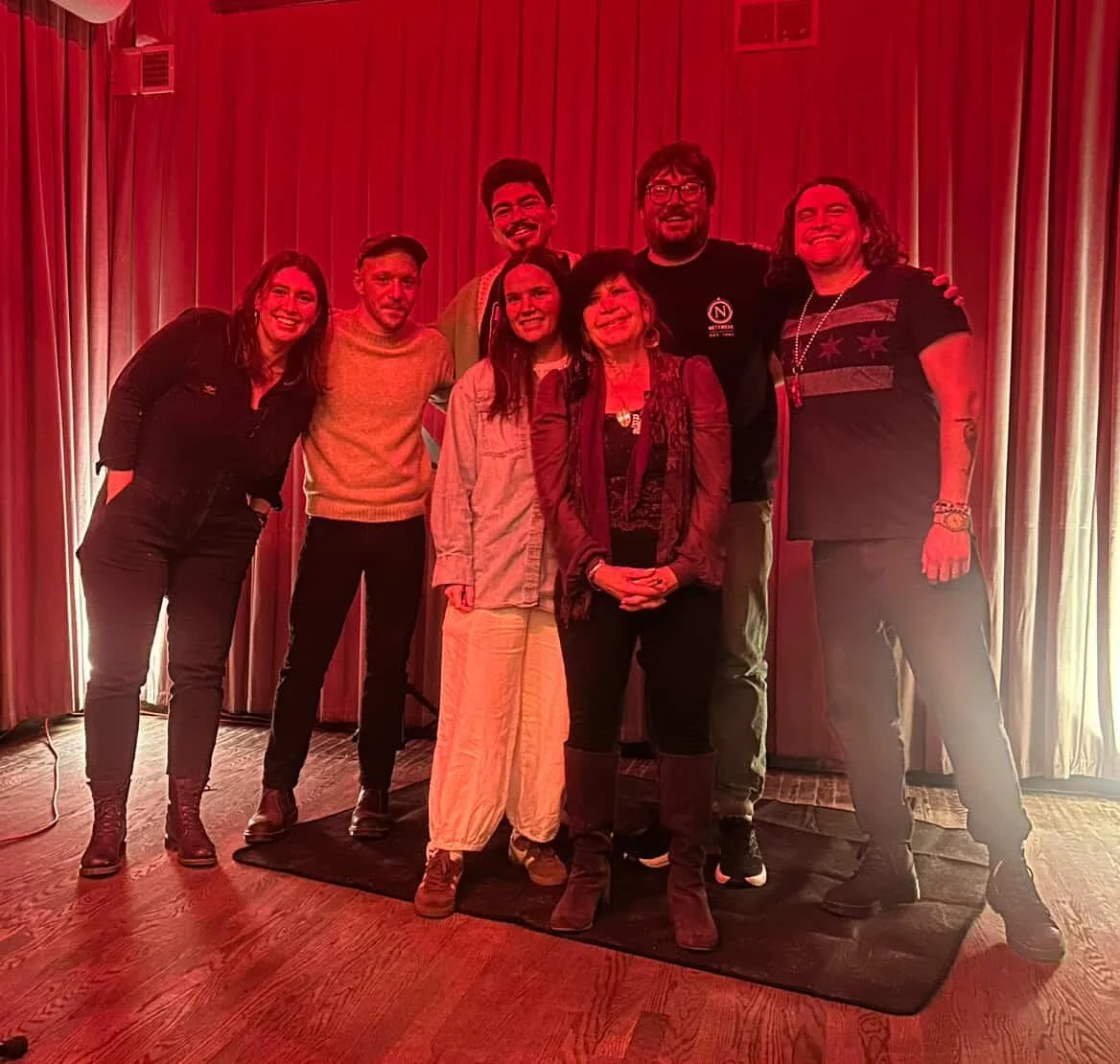
Last week, I had the privilege of meeting and hearing Liza Hudock read at my bi-monthly Chicago series, Neon Night Mic, where she closed out the six person event. We sent questions and answers via email prior to the reading, and I’m glad to finally publish it today. In this interview, we chat about her journey to publication, her creative process, a past essay, a writing prompt, and more.
Congrats on your debut collection Reveille! it’s such a masterful mixture of the heavy with the reflective with the heartfelt with the uncanny. Can you talk a bit about the process of writing and assembling this book?
I wrote the entirety of Reveille while I was an MFA student at Warren Wilson. During this time, my mother and youngest sister died within eight months of each other. I considered dropping out of the program every week because it was hard to generate poems whilst so immersed in caregiving and grief. At the same time, most people in the world are never presented with convenient hours for writing poems. If I waited for the perfect time to write, it might never have come. I didn’t like how biographical my poems were, but I had to allow myself to simply describe my surroundings and whatever entered my imagination. As far as process, I wrote the poems by hand; erratically, sporadically, at inconsistent hours and locations. When it came time to assemble them into a manuscript, my teacher Sally Ball told me about the concept of constellating poems into clusters then ordering the clusters. Sally also believes that a book is alive. It must have a heart, nervous system, etc. With her words in mind, I printed out all my poems and shuffled them around and into different groups for a couple weeks. At some point, they seemed to lock magically into their places. Their cohesion surprised me.
As this is your debut collection, how long have you been writing poems and how old is the oldest poem in the book?
I have been interested in writing poems for about 8 years. The oldest poem in Reveille is “Origami Pig,” from 2020.
Before getting accepted for publication, did this manuscript have many different iterations?
No. Once the poems were assembled, the manuscript probably went through one more careful alteration. “Grizzly” was drastically revised and mostly discarded at the last minute
Was it always titled Reveille?
The manuscript had no title before I wrote the poem “Reveille,” in 2023. It was one of the last poems I wrote, and seeing it in the context of the others, I felt sure it was the title I was working towards.
How did you get acquainted with Flood Editions?
My mentor, Daisy Fried, sent my manuscript to Flood because she thought they might like it. I knew how unlikely it was that they would want or be able to publish it, but they did.
Your poems often begin with a simple image or act (like making soup or washing wool or putting on a fur coat) and organically lead down these wonderful rabbit holes of meditation and introspection. Is it that initial image/act that has you approaching the blank page? In other words, how do you find yourself beginning a poem?
For the poems in Reveille, I did often begin by describing what I saw or what I happened to be doing at the time. I allowed the description to take me wherever it would. Now, I am more often nagged by a short, sensory memory or a phrase that has entered my mind but doesn’t quite sound like me. The poem begins when I finally devote some attention to whatever the nagging thing is.
Next to these simple images or acts, you also have poems dealing with caretaking, addiction, death, and grief. Were these poems all written around the same time as one other, or do you seem them as separate times / sequences in your life?
I wrote all the poems in Reveille during those intense couple years of caregiving and grief. So, the poems about simple, daily acts were inspired by the same days as those that speak to the bigger themes you have mentioned like addiction and death. The dailiness of life is muffled by this or that crisis, but it’s never totally silenced.
In your Poetry Daily essay, in regards to your prose poem “Hope,” you wrote: "I notice that I employed the rhythm of a metered form, the ballad, which I associate with fable or myth, in some of the phrases that document my experience of taking care of my mom." I love this description so much, and the idea of taking the autobiographical and turning it into something mythical. Have you always been inspired/interested in myth-making and/or the fable and/or the fairytale?
Thank you for reading my essay. I was not interested in myth-making until I realized that the mythological foundation of my own life was in need of repair. I was aware that mythology is a part of culture and that different cultures have different mythologies, but I didn’t think I had culture, so how could I find my experiences reflected in any kind of mythology? When my mom and sister died, I realized that my life had in fact relied on stories all along, but somehow, they were the wrong stories. The myth-making in my poems was a compulsive response to my sudden desire for new narratives. I still haven’t actually read many myths, fables, or fairytales, but I will.
In that same essay, you mention: "Once I began reading prose poems (Zbigniew Herbert’s, specifically), I began to detect their possibilities." Are there other touchstone prose poets for you?
Other touchstone prose poets are Marosa di Giorgio, Dionne Brand (The Blue Clerk), and Christine Kitano. These three, I return to constantly.
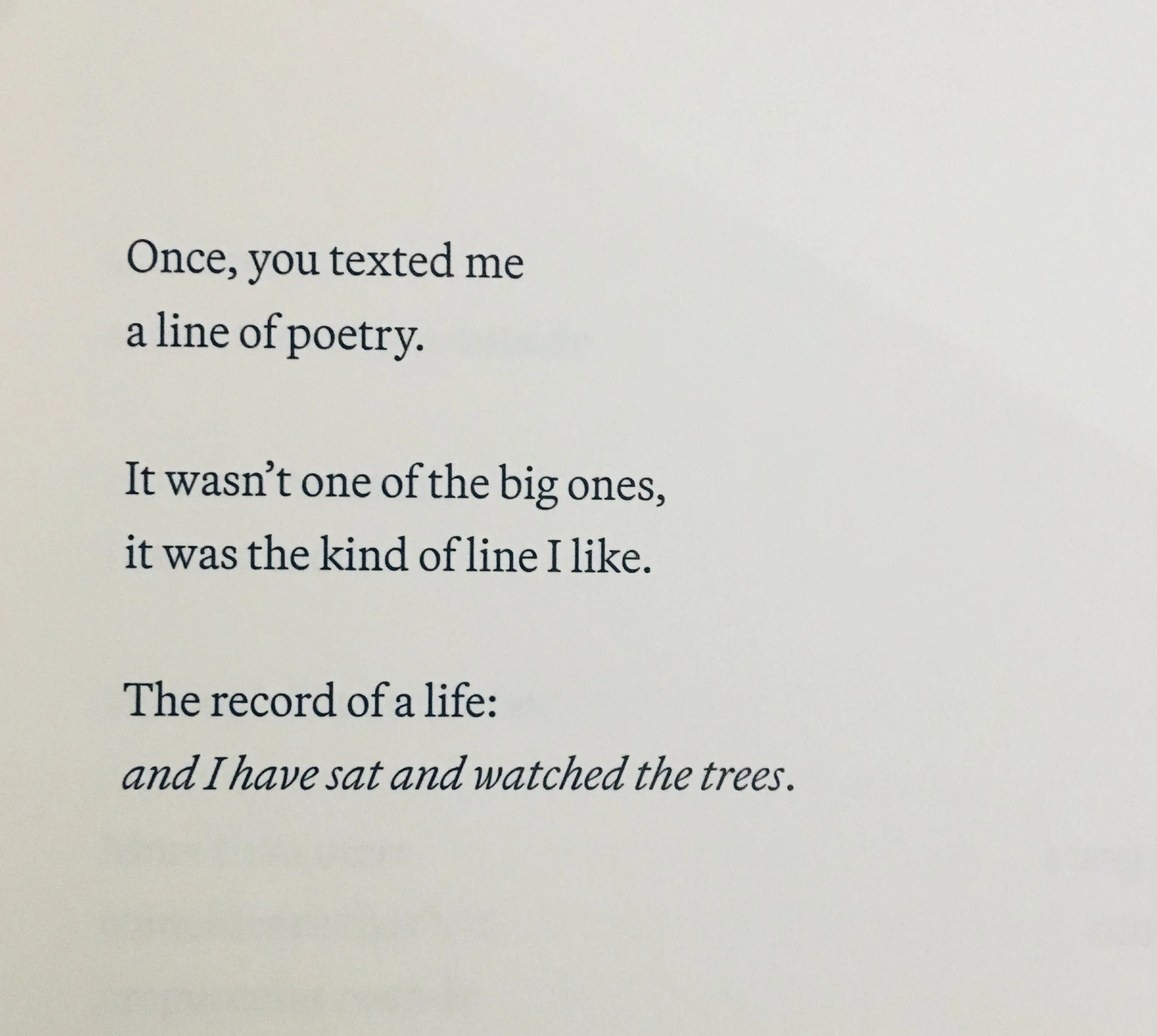
Although your debut collection is still brand new, in your Four Way Review interview, you say your new poems are "less narrative, less sequential. More imaginary." Can you expand on that a bit?
I’m probably still too entrenched in what I’m working on to describe it right now, but I will try. When I describe Reveille as narrative and sequential, I mean I wrote it during a time that I was obsessed with what was happening in my life and the order in which things happened. I think the poems reflect that obsession. When I say the poems I’m working on now are more imaginary, I might just mean they are more inspired by dreams and daydreams. Life events are still there, but I’m no longer distressed about nailing down what has happened.
Outside of your own work, what are some recent reads that you have enjoyed?
A Time to Keep Silence by Patrick Leigh Fermor and Last Day on Earth in the Eternal City by Angie Estes.
I'll ask the same question, but in regards to recent movies and/or music. What are some films or albums you'd recommend?
That’s hard. I haven’t watched or listened to anything in a long time. I play and sing songs for my child all day, so when I’m not doing that, I like to stare into space and hear nothing.
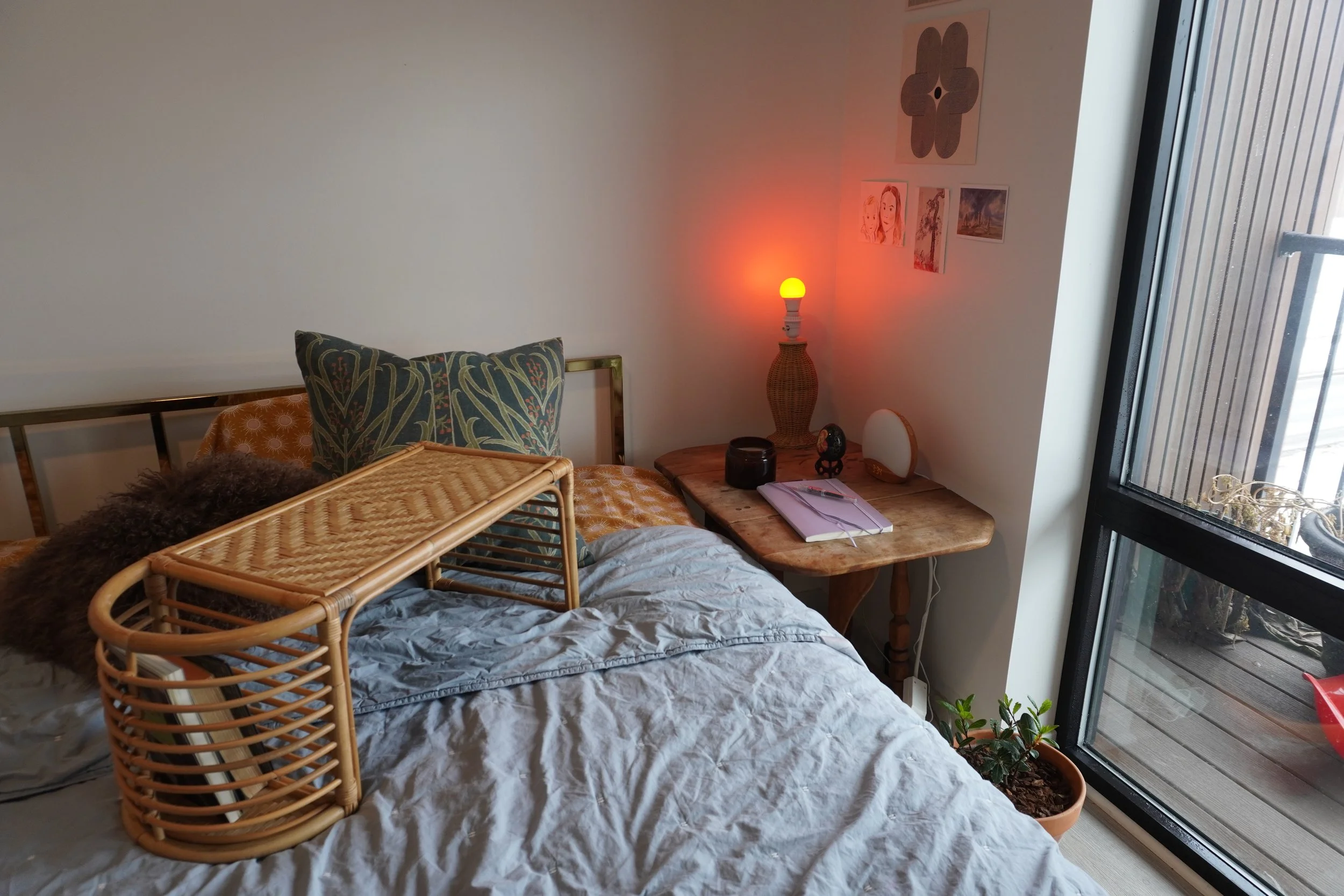
If you can, provide a photo of your writing workspace. What are some essentials while you create?
I write in my bed right now. The only essential besides a pen and paper is relative quiet. My toddler interrupts a lot, but I don’t shut the door.
For this ongoing author interview series, I'm asking for everyone to present a writing prompt. It can be as abstract or as concrete as you choose.
Take a poem you have already written, rewrite it within the constraints of a received form (sonnet, villanelle, etc) then revise it again as free verse.
In closing, do you have any advice for early writers? Or rather, what's something that keeps you returning to the page?
Advice for early writers…I don’t know. I am an early writer. It can take a long time to hear how a poem wants to sound and see how it wants to look. A poem will require you to make a lot of decisions and it’s hard to decide correctly at every step. Sometimes, you have to go back. I’m not patient, but I would advise an early writer to be patient. Something that keeps me returning to the page is welcoming breaks from the page. If I don’t feel like writing, it's a good time to do other things. When I do feel like writing, it tends to take over.