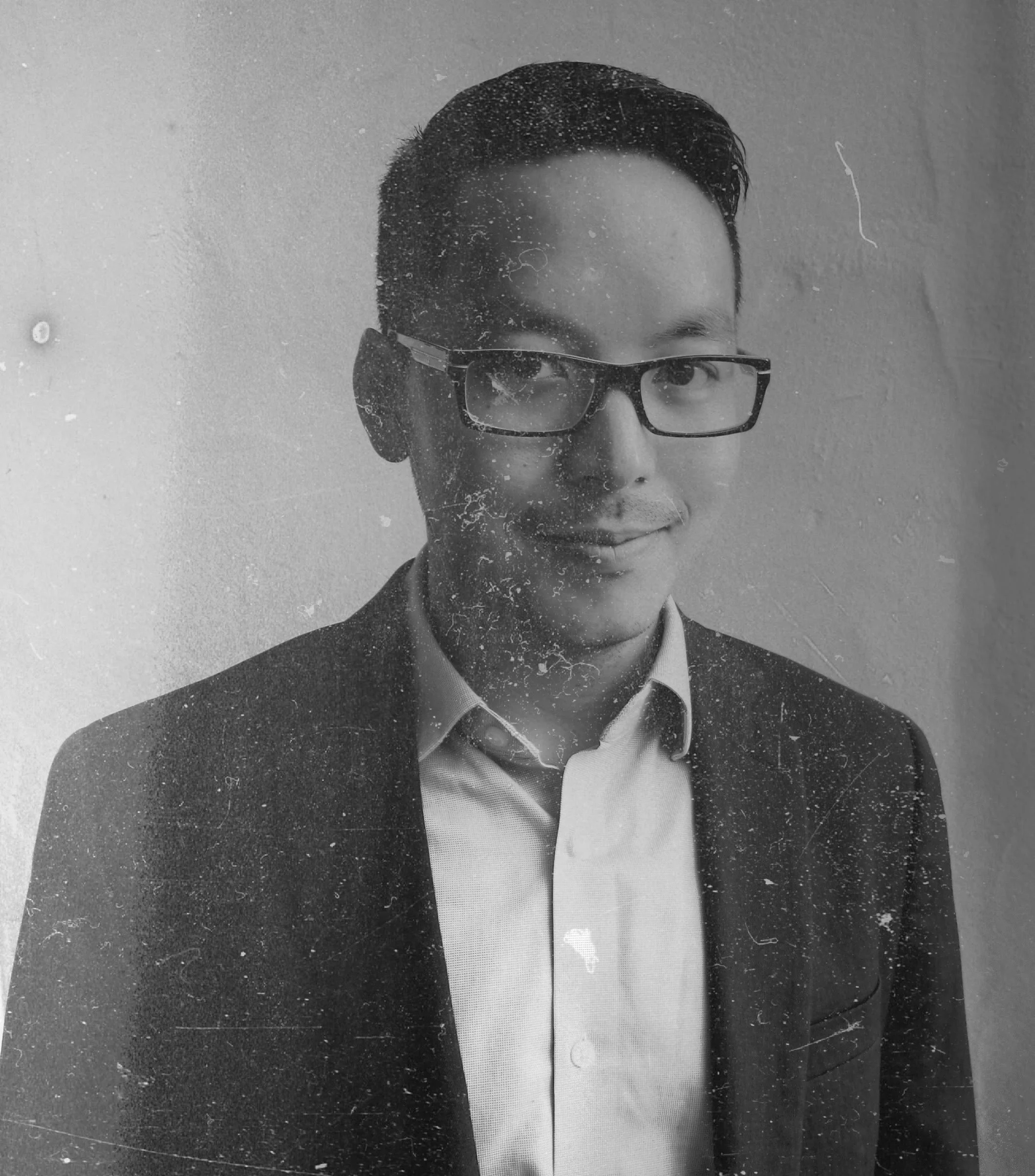
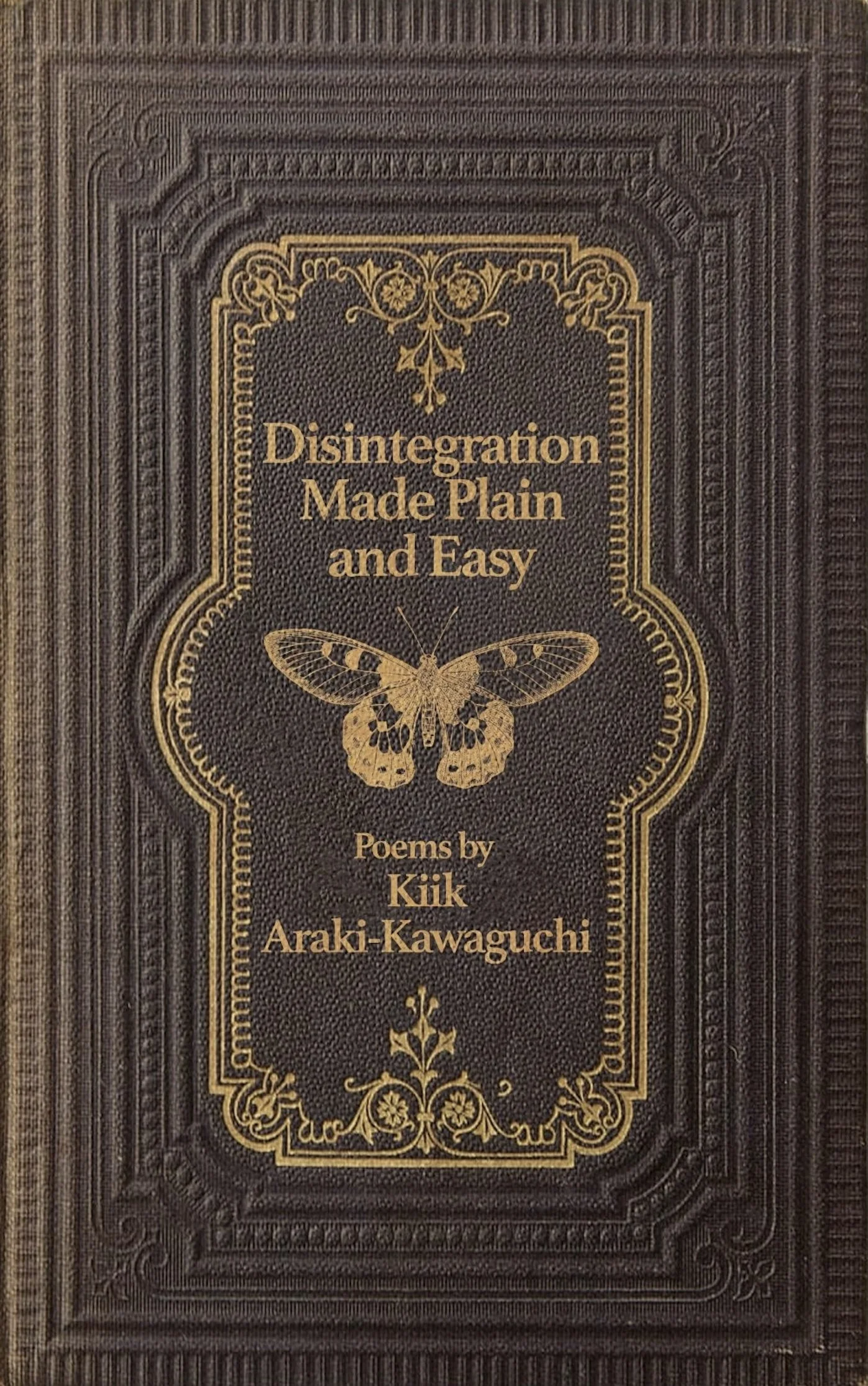
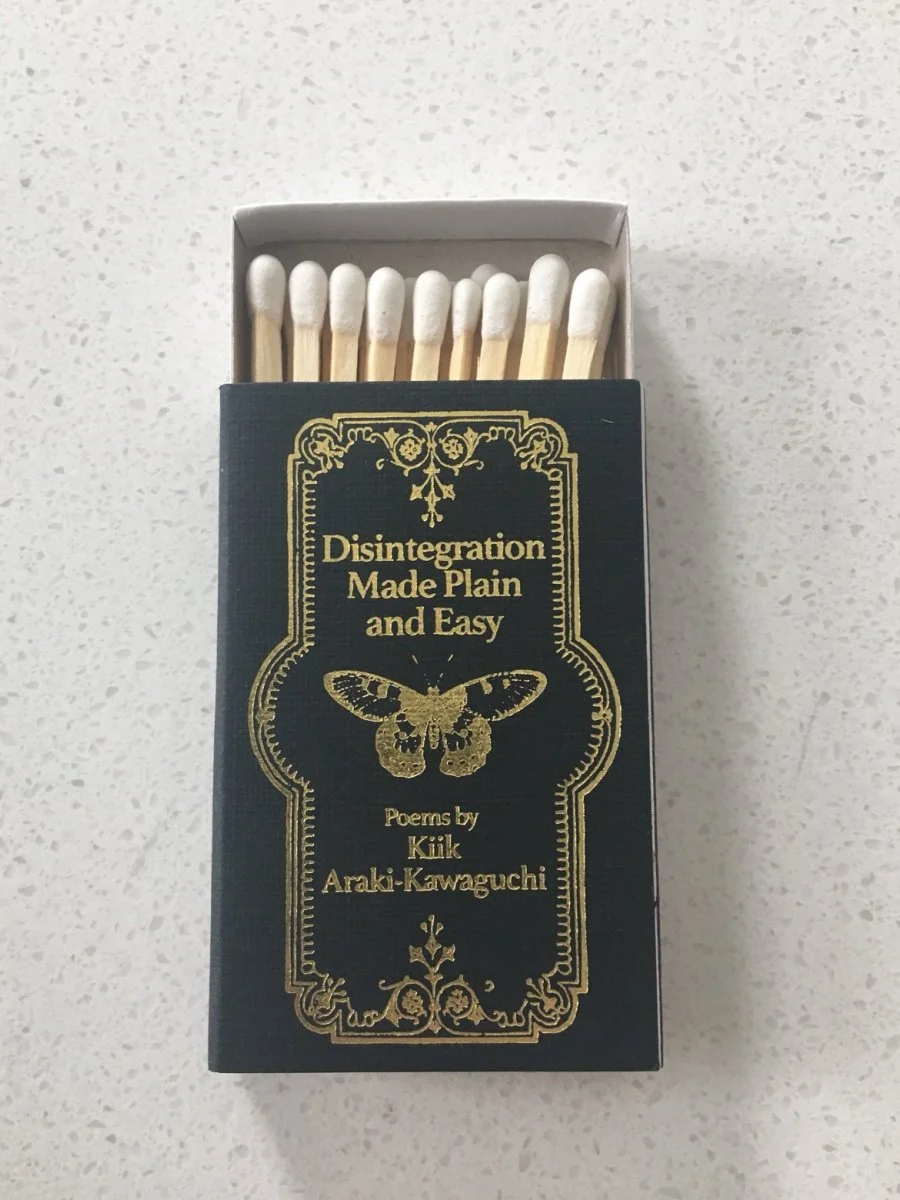
Kiik Araki-Kawaguchi’s DISINTEGRATION MADE PLAIN AND EASY is my very favorite debut poetry collection. Period. It's surreal, absurd, tender, grotesque, laugh out loud funny, fabulist, & strange.
A manuscript so strong that it inspired me to launch my own indie press so others would be able to reach such a collection. Kiik’s book was my first release through Pizama Press. I can't thank Kiik enough and I can’t recommend this collection highly enough.
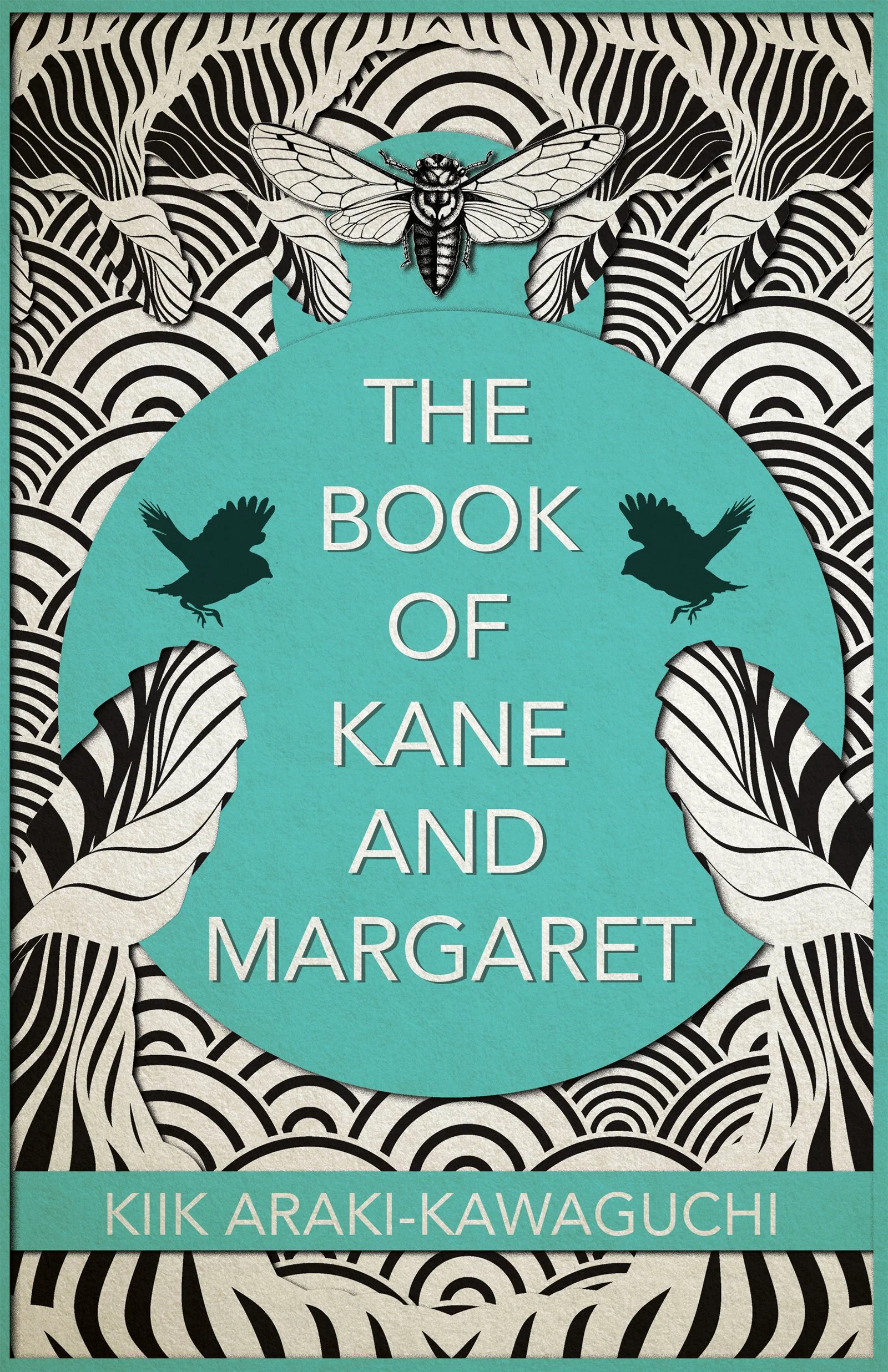
While you’re at it, be sure to grab his debut novel, THE BOOK OF KANE AND MARGARET, out with FC2. It’s the reason I found out about Kiik in the first place. It’s one of my favorite novels and unlike any other novel I’ve read.
Back in March, I chatted with Kiik in person, at AWP, and here is the full transcript. We talked about his writing process, switching between poetry and prose, taking early inspiration from music, stand-up comedy, how the work is never done, and some future projects he’s working on.
After launching a press and releasing a book with Kiik in 2025, it’s only right we spend the last day of the year sharing this in-depth conversation.
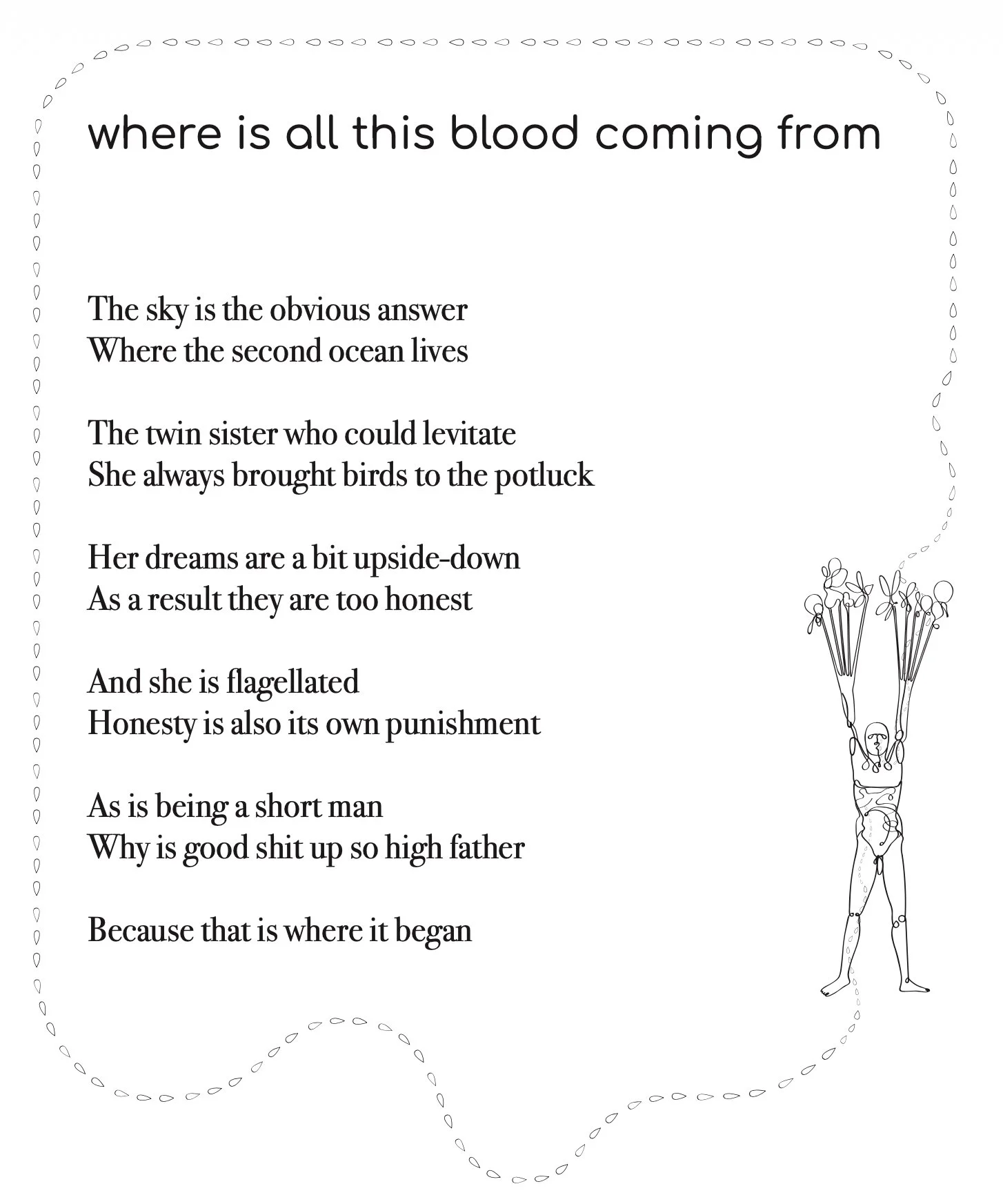
The oldest poem in Disintegration Made Plain and Easy dates back over a decade. Can you talk about the process of assembling this collection?
The collection, some form of it, was written back in my first graduate program in Davis. That would be 2011. Then some version of it was written and completed in 2014, which is when I had some mentors say that it was done. And then I sent it off for contests and it was a finalist a couple of times in 2015, and so I thought, “Well, okay, it’ll happen soon,” and then it just got rejected for the next eight years or something like that.
It was written over a pretty long period. Over two graduate programs. And then continued to be written and rewritten over many years of rejection, which has probably informed the content to some extent, too, until it had found the right hands.
Right before the pandemic, it was also under contract with a different press. Those folks were great mentors to me, people who I really love and respect, but their press went defunct during the pandemic times, and so I sort of thought of the project was cursed, and just thought it was probably time to move on. But then we were connected, and it just felt like a magical fit, and so I've just felt lucky ever since that it's been in your hands, in Pizama’s hands. So kind of a long journey.
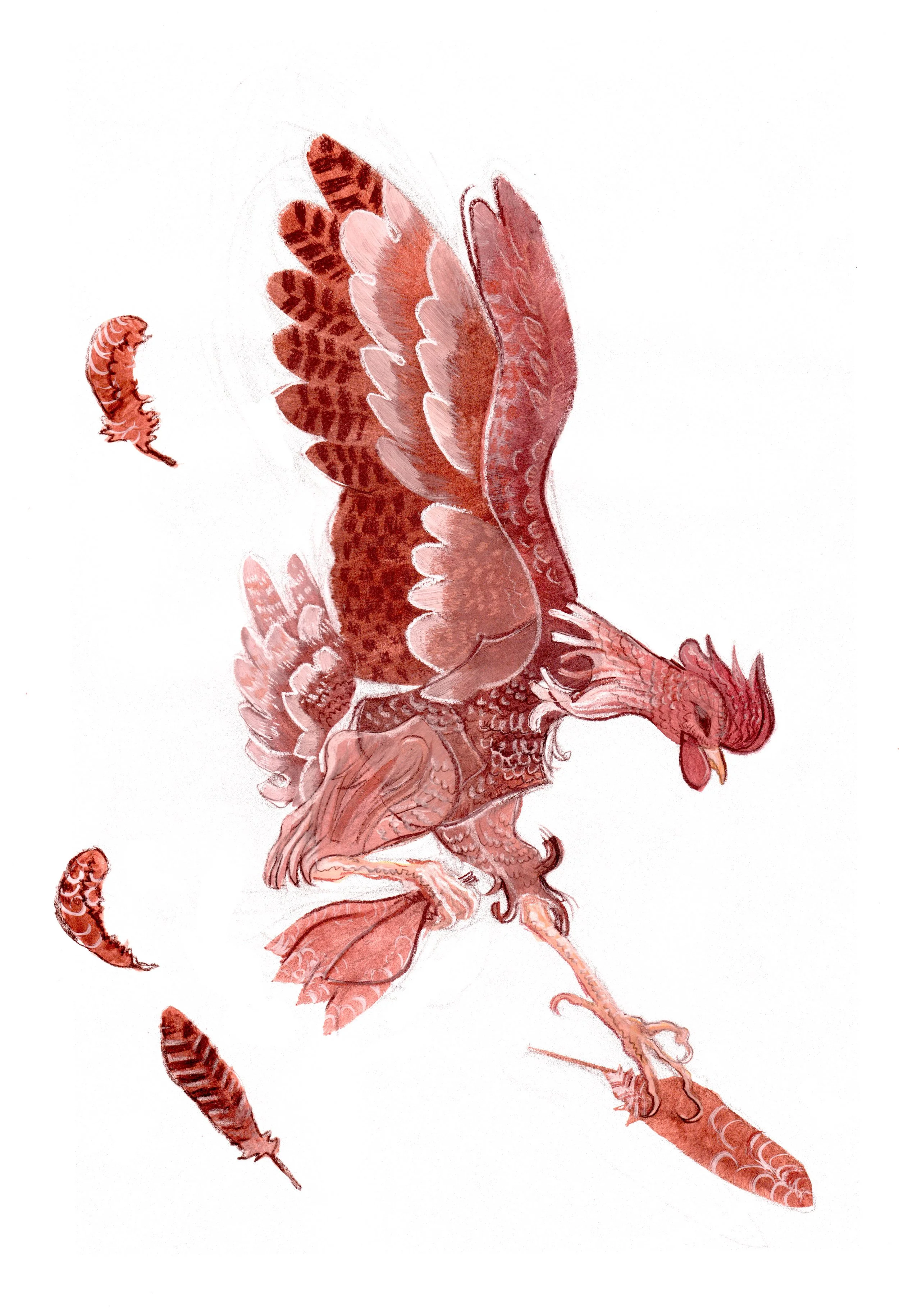
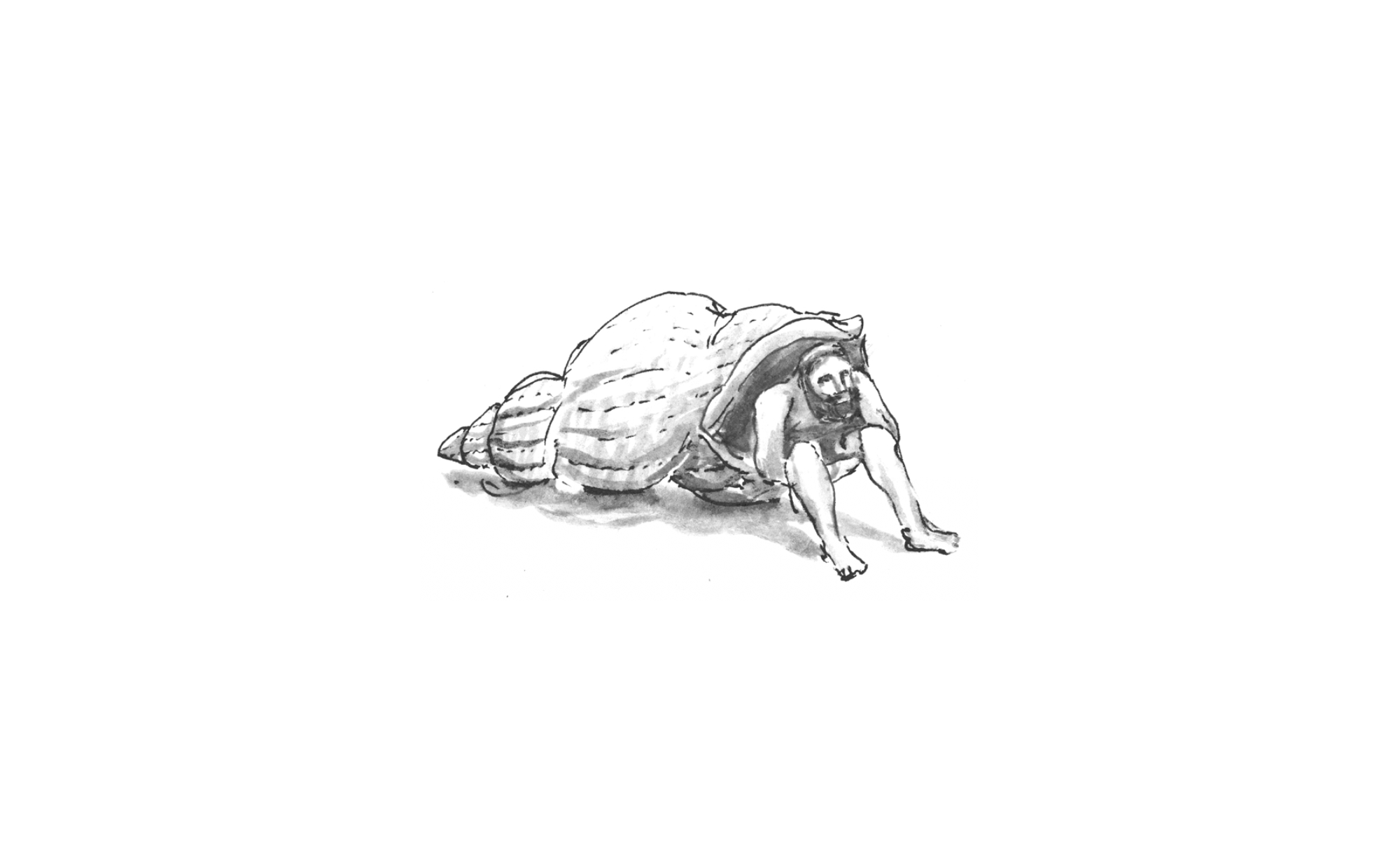
What inspired you to include illustrations in the book?
I've known Gau since…we were in the same dorm back in undergrad, so we've known each other since we were 19, I think, and I hope he’d be okay with me sharing this story. But my first day that I met Gau, I went into his dorm room and he had all these charcoal drawings of himself naked, like they were just covered in his dorm walls. And the art was amazing and also, I'd never seen anything like that, like the sort of, I don't know, whatever one calls it, weirdness, confidence, vulnerability of doing that, and also, you know, like having one's art all around to just sort of be thinking about it all the time. We’ve stayed friends since then.
Gau’s my favorite artist, and one of my best friends, and so when my book of fiction came out, I'd asked him if I could commission him just for a couple of illustrations for that book. And he did it, and I was blown away by his work there. And I just sort of have felt if I ever am able to, and if Gau is willing to, I'm gonna ask him to do illustrations for anything I write, you know, from here on out, and, so hopefully our friendship keeps up. I almost write sometimes as an excuse to see what he'll illustrate.
We had just been talking about this, but he'd originally done just a handful of illustrations for the manuscript, but because the press went defunct, there was this purgatory of two or three years where the manuscript was in limbo. But Gau had continued to do all of these really interesting illustrations for it, and so Pizama coming around at the right time, there were illustrations for almost every poem in the book.
I can't remember about the direction or the discussions around what the illustrations might look like, but Gau knew the title, and he knew the poems, so he sort of knew their vibes that were coming off of them. And I think what we had discussed was we wanted the book to look almost oddly ornate, kind of like a very old cookbook. The original inspiration for the title was that book The Art of Cookery Made Plain and Easy and so the title is a play on that. It’s by Hannah Glasse, this old cookbook, and it was meant to be fancy recipes, but to be made by your man servant who doesn't know how to cook, right? And so that was kind of the spirit of it. And we said, “Oh, wouldn't it be funny if it looks like this really fancy, old, ornate book, but then all these poems are these weird getting naked poems, and these weird grotesque, strange, surreal, dream poems? And taking that really seriously in terms of the illustrations, and somehow I feel like Gau captured them very wonderfully.
You said before that you want your poetry book to show readers that they, too, can write poems. Can you talk a bit about making poetry seem less of a daunting art form? Or how you see this collection as maybe an accessibility thing, or just like an openness for the reader to give it a shot?
There's something about the book in that I think it uses a really spare palette. Part of it is this idea that I'm always writing for some version of myself that's much younger, that was hungry for literature that I couldn't find at the age of, like, 13, 14, 15 years old. And so I always have that age in mind when I'm writing.
I remember discovering song lyrics and booklets around that time, and first learning to play guitar. I don't play very well, but the way I learned was my parents had gotten me the song booklet for Nirvana’s MTV Unplugged in New York, and so I was learning how to play guitar through those songs. They use a very minimalist palette for their writing of those songs. And there was something electrifying about that: I could never play like them, or sing like them, or write songs like them, but there was something alluring about the fact that, if I learn these handful of three or four chords, there's this idea that you can have all the building blocks to make something magnificent.
There's something about this book, trying to keep the palette really spare, really minimalist. And I'm hoping that allure is there for other folks who are looking to write poetry in some ways. They have all the same words at hand for them and so there's something about trying to recapture that electricity at age 13, 14, 15.
Poetry is one of the only times I ever feel confident in life. When I'm in the flow of writing a poem, and only in that time, too, because an hour later, I'm totally embarrassed of whatever I wrote. But in that moment, I feel oddly confident. And I think the only way I can feel that way is when the building blocks I'm using are really spare.
It's not a fancy book in terms of the language or the tricks that it's using. It's fairly plain spoken.
I was talking about this with C.T. Salazar and Vik Shirley, and she was saying that James Tate was the introduction for her, and C.T. was saying it was C.D. Wright for him. I feel like it was Richard Brautigan and Zachary Schomburg for me. In my undergrad, we only seemed to cover capital P Poetry and Shakespeare, etc. And I was like, I don't know how to do this. This is terrifying. Where's the metaphor? What's the meter? I didn’t want to do it.
But when I read these weird, surrealist poems, just like yours. It's like, oh, this could be fun. I could write about my dreams. I could make up a strange story. It doesn't have to be A, B, A, B rhymes, it doesn't have to be a sonnet with a volta. All that stuff is great now that I understand it better, but it just felt less daunting discovering this new world of modern surrealist poets. And I feel like your book has that feeling as well, where it's just fun.
Thank you. I think for me it was probably Li-Young Lee, Billy Collins, Gerald Stern, folks like that, whose poetry was on a deeper level - there's such a really intense layer of nuance and complexity - but on the surface, it's really plain spoken, like someone talking to you over over a meal or something.
Your first book was a novel in fragments. This might be a big question, but do you see yourself as a poet or a novelist or just a writer or both? How do you see those two worlds kind of colliding?
That's a good question. I don't know.
I often just don't see myself as anything.
Just disintegrating?
[laughs] Yeah. I often feel like a writer who is under various kinds of environmental pressure, and those sorts of pressures have influence on the work itself. For example, that other book of fiction, the work is so small because I was always on some grad school hustle. I was in grad school, but also working in a movie theater at the same time, and doing door-to-door tutoring. When I was in San Diego, I was working for the Asian American Film Festival, and I was doing tutoring for high school kids who were trying to get accepted into college. And because of that, I always felt like my fiction couldn't get any longer than a few pages. I always felt like I have to do something where I can concentrate on it for just one week, because sometimes my attention span and energy would only be about that much and to some extent, my poetry is influenced that way too. If I don't sit down and write 80% of the poem in one go, sometimes I know that poem won't fly because I won't have that much time over the next two or three days to work on it. And so I don't know if I'm a poet or a fiction writer, or what I am really, but I think I'm just some amphibian that's in these various weird pools of water and they all have a very strong influence on whatever my writing process is.
The first thing I ever wrote was a love poem for my partner. I think when I first started writing, I was probably 24 or something like that. 24, 25, and in love for the first time, and I had just read Pablo Neruda, his collection, and so was writing her like 200 love poems. Pretty bad ones. I think about that as my embryonic start. I'm some some version of that still.
That’s beautiful. I love that. So what advice do you have for writers working on their manuscript, waiting to get published, or trying to traverse through the terrain of indie lit publishing, or any kind of advice for people trying to figure it out?
Yeah, that's a tough one. I think it depends on what one's life is like, what one has the bandwidth and energy and resources for. I think the best advice I can give for most folks is try and make the writing as collaborative and social as possible. I think the writing will go so far as the network of folks around you.
I used to think of writing as this very solitary activity, someone like brooding up in an attic over their pages or over their typewriter. I realized over time, my writing was at its strongest when various parts of the writing process were social. I'm writing that initial draft, but then I'm hopefully handing it off to someone else, or even from the start, if someone's giving me a prompt, the way that you had given my students a prompt, the way I had used that prompt, that is actually filling me with a lot of energy and excitement to work on that poem. And I'm actually going to work on that poem much longer, I think, because of its connection to you, connection to folks that I like. And I think as a result, I think those poems are stronger, but I think I'm also working on them longer, so hopefully they are more effective, competent poems anyway, because I'm just putting more energy into them. And so from the start of that process, someone gave me a prompt, I'm writing that thing, then I'm handing it off to someone else to take a look. They might give me some feedback, and then I might lose enthusiasm for it. I might lose energy for it. But if I have some friends around me, they might be the ones that actually support me and keep me excited about that project until it gets published.
I think I'd mentioned to you, but I've quit many times as a writer, and it's usually just been a friend from grad school or somewhere else that said, why don't you just submit it to one more place? Or why don't you get back and try just this one other writing prompt and see how it goes? It's usually been someone else who has brought me back to my writing practice. So the best advice I can give, it's not really a craft thing, it's really more about finding the people around you that work for you.
This is less of an interview question, and more of a follow-up, but the first poem you read yesterday at the reading: do you see yourself continuing to work on that one? You don't think that was done?
I don't know. You visited my students a week and a half ago, something like that. So that's how old that piece is, and I'm guessing I'll continue to come back to it over the next couple of years. And maybe I would send it out when I think it's ready, and maybe that's when it feels a little bit done, when I've sent it off. But then if it gets rejected for publication, maybe it's not done, I'll go through another round of edits, I'll send it out again. And so I guess there's all these things that sort of help me to psychologically feel like it's done enough that I can send it off.
I was tinkering with some of these poems for Disintegration back in 2011, or even before, right? Because you had given me such loving feedback for some of them, and also such useful feedback, I was tinkering with them, up until we sort of felt like we had the final manuscript, so that revision process was almost 15 years, tinkering with it along the way. It can be a long process.
Yeah, I’ve often heard the writing phrase “the poem is never done” or “the work is never done.” And you just said, done enough. The poem is never done. It's done enough. I love that.
For my poems, there's something I actually like about them appearing in different forms of many different places. It almost feels like a kind of multiverse in some ways. You know, in some other universe, the poem was this totally different way. And there are many folks who might like those versions better. And so I kind of like the idea that there's all these genetic mutations of the work out there in different forms.
I like how with certain writers, they'll assemble their collected or their selected, and will be revising stuff that has been untouched since the 80s or the 90s. Looking back and seeing how this line could change. I listened to a podcast episode with Mary Ruefle and she was editing her ‘finished’ poems on the spot, saying she didn’t like certain lines or how she should really change that final word.
I love that. Yeah. I mean, I love the idea too, of like, once I feel a little bit done enough with my poems.
One of the best forms of flattery would be: could someone else take this and remix it for me? Which is something you do too with your centos. A cento is, in some ways, a form of curation, collage, a surrealist remix. And I like the work being out there in multiple forms, multiple ways.
Circling back to your debut novel, what is something that you wish you'd known before releasing it into the world? That younger Kiik had known prior to publication. Was there anything you found daunting or that you wish you had known before publication day?
I'll share one really great piece of advice, and kind of a magical thing that happened for that book, which is to try your hardest to have a cover that you can really be happy with.
The original cover for the FC2 book had seen like three different versions, and they were all pretty cool, but just none of them seemed quite right for the book. And I had sent the book off to the VanderMeers, Jeff and Ann VanderMeer, because they were going to both blurb the book, and they had looked at the cover and said, that just doesn't seem right, you know, for your book, and is there something that can be done about the cover?
And at that point, the money that had been allocated for it was already spent. And Jeff and Ann said, We just feel strongly it should be something different. We know somebody who works really fast, we're just gonna ask him, we'll pay for it to have them mock up a different cover. And they sent it to him. He sent them, three different versions of the cover just a week later, and one of them was the cover of the book. And it was at the time I was feeling very under confident about it. I didn't feel like it would really reach anybody. And I just thought, What does it matter what the cover will look like, you know, if only a handful of people are going to read it? But in retrospect, boy, they gave me such great advice and support in that moment. And now, every time I give the book to somebody, I feel so much more proud of it just because of the way that it presents. It just looks right to me. And there's something about it that feels very lucky that it got to happen that way. Maybe I would feel differently if it was one of the covers where I was only halfway satisfied with. That they did that for me, was just so generous, like it feels like it's one of those things that I have to remind myself happened, therefore I need to keep writing, because, on some level, they did me that incredible service that now I have to sort of look to try and give it back in some ways, try to honor it.
That's so cool. Art direction, or art curation by the VanderMeers. Not many can say that.
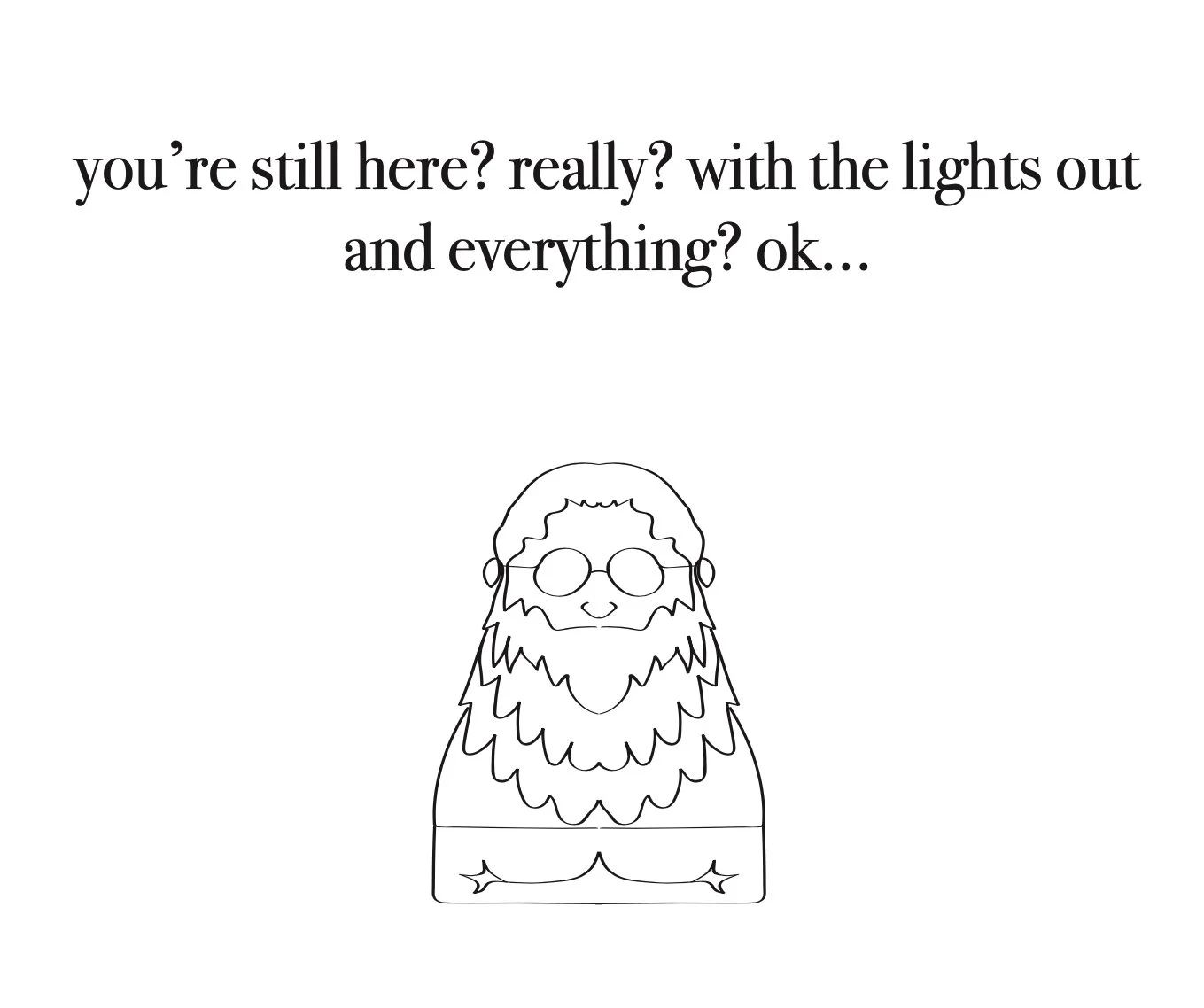
How do you split time between writing, teaching, fatherhood and generally, juggling life?
Not well and not successfully? I would say, family takes probably 80% of my energy in my brain. And in some ways that seems really right to me, in terms of my personal values, that's the most important thing. And then work takes the other 17% and writing tends to be the thing that gets squeezed out for me.
But I do notice I just feel so much better if I can make time for writing at any point in the week. And I just feel right if I have written at some point, and it doesn't have to be anything that I even feel that confident or that excited about. It's just the process of sitting down trying to get into that flow state of writing. I think there are just a lot of health and psychological benefits to it, and so I don't give it as much time as I need to, which is probably the way a lot of folks feel.
I like the 80, 17, 3% breakdown.
It kind of makes sense as to why the book took so long to be made. There's something kind of cool about that, too. A book that has been made over 10 years, I've been thinking about it, for 10, 12, a lot of years, and and so in some ways, it feels like a greatest hits, because I don't know how many poems are in the manuscript, but probably 150 have gotten thrown away in that time. It’s been slow, but the stuff that remains is the stuff I have felt the best about over a long period of time.
The initial manuscript was called Ann Hogg is Coming, right? And that’s your social media handle. There are some hogg poems I found online from the early days, almost like you had created your own little world, which is so cool. Can you talk about that?
Thank you. It's funny, but I think now there is a book called Hogbook, written by the comedian Maria Bamford and her husband Scott Cassidy. She’s one of my favorite comedians and she has this joke about how she's writing her memoir, and it's gonna be called Hogbook. And it was just such a weird joke. I remember that title, and so I was like, I'm gonna write a collection of poetry called Hogg Book. I'd been thinking about that for a long, long time. And then I'd been watching all my favorite old episodes of Arrested Development. And my favorite joke in the whole show is this one where George Michael and Michael are talking and Michael is saying, Oh, you need to bring your girlfriend, Ann, with us on this trip. I want to meet her. And he's like, you're being a little hog, you're being a little Ann hog. And and the joke comes back a bunch of different times in the episode, and where there's this line that Michael says, Oh, Annhog is coming? And it has stuck out in my brain for some reason. Annhog is coming. That’s where it comes from. Bleeding into poetry, a lot of hogginess, just my brain.
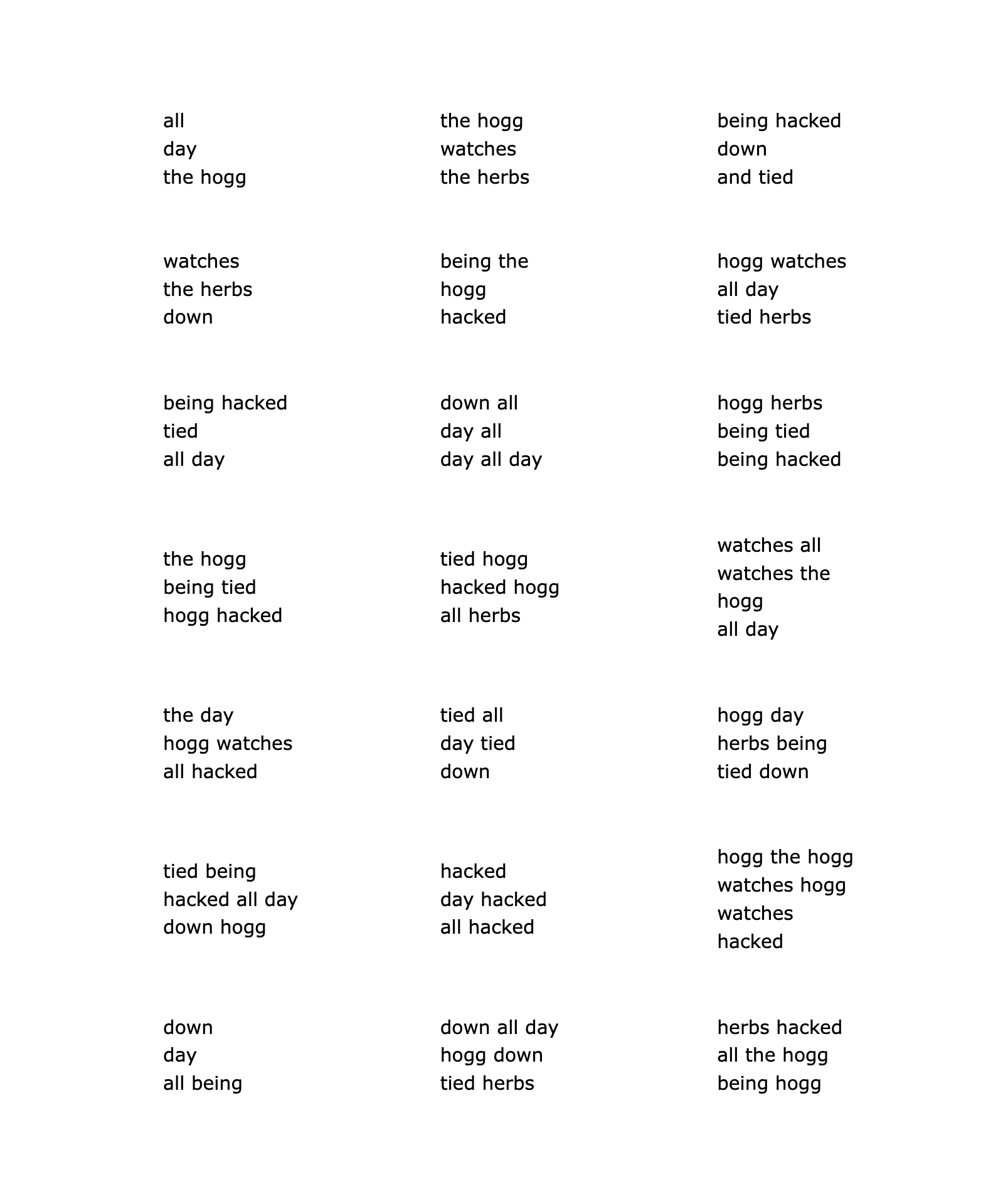
Your book of poems just came out, but are you working on anything else right now? What's next for you? I know you have already said you are slow to work on projects, and it can take a decade. Any other works in progress, or just in progress?
I'm working on two collections, one fiction, one poetry. And the collection of fiction is, it's a whole bunch of different things. One is flash fiction, that's where every story is one sentence long. And so I'm working on a series of those. And then the other form that I've been interested in is this FAQ form.
My mentor Ben Doller had written a whole book called FAQ, where every poem starts with, ‘Thank you for your question,’ and and I was like, Oh, that's such a fun form. And so I wrote a few pieces of flash that use that form, too. And so it's those one sentence stories, the flash, FAQ, stories. And then this other form I was thinking about is where novels are condensed into a summary and just a few pages. The idea would be like, if you had run into a synopsis of one of your favorite books on Wikipedia. Sometimes the summaries for them are really fun and engaging. And so my hope was to make like a synopsis of a bigger story, almost like its own short story, and really fun. And so that's one collection of fiction, and then the collection of poetry is something I was reading from last night, and I think it'll be called, My Loves, My Loves, My Loves, My Loves. And it's kind of these poems, thinking about, if I die tomorrow, what are the pieces of knowledge or advice that I would give to my kids? And so they're very honest, but also really weird, because I think the things that I ruminate on when I'm thinking about, what if I die? They tend to be pretty anxious, weird poems and so they're kind of filled with bad advice and anxiety and then a lot of thinking about death. And so those are the other ones that I'm working on.
In closing, do you have any additional thoughts or final words of advice or anything we didn’t cover?
I don't think so. I'll just thank Ben Niespodziany, thank you, Pizama press for loving this book, for honoring it in a way that I feel unworthy for, but I'm gonna take it because I feel very lucky to have it. And so thank you. Thank you for that. And yeah, nothing else for me. Thank you.