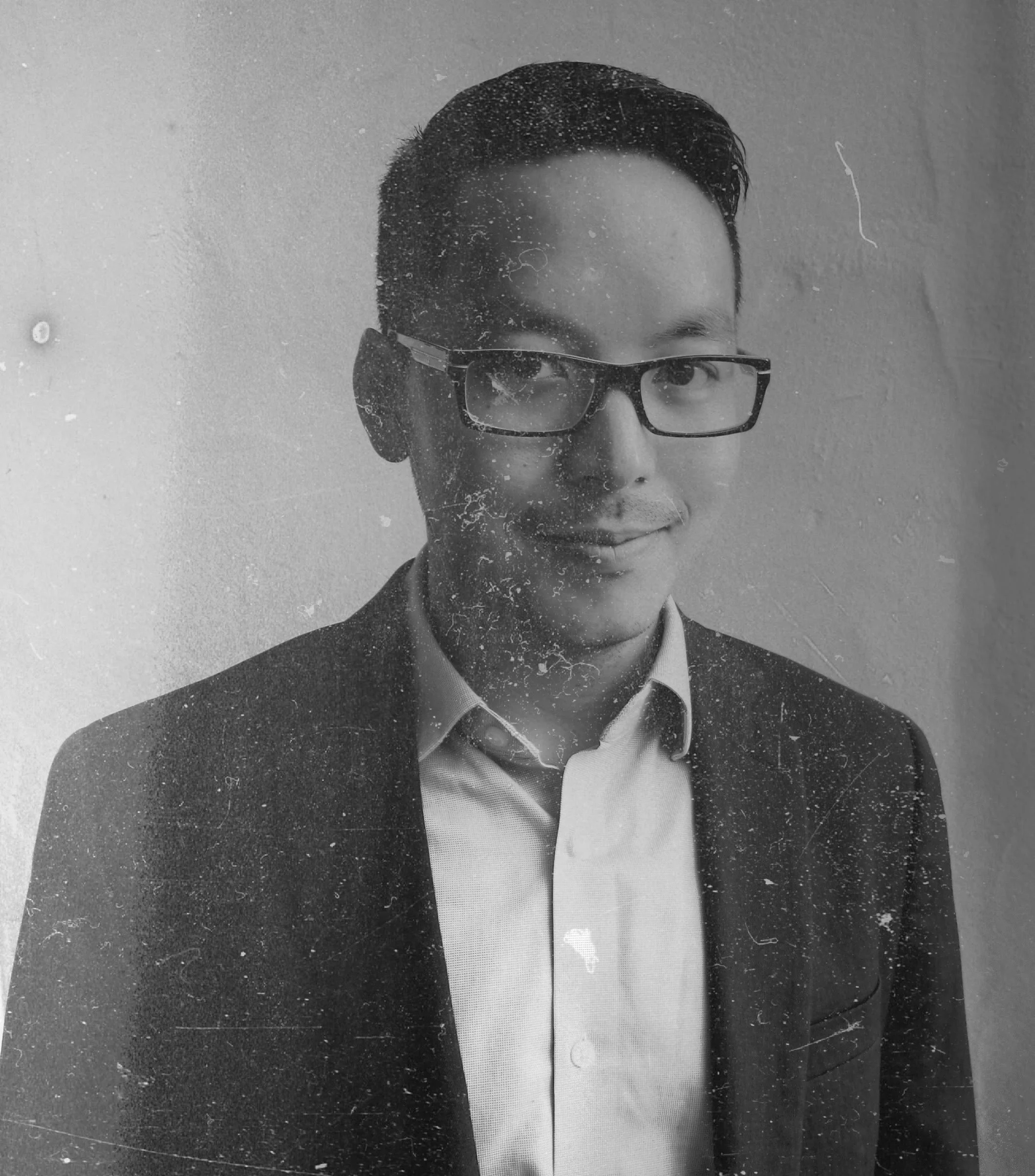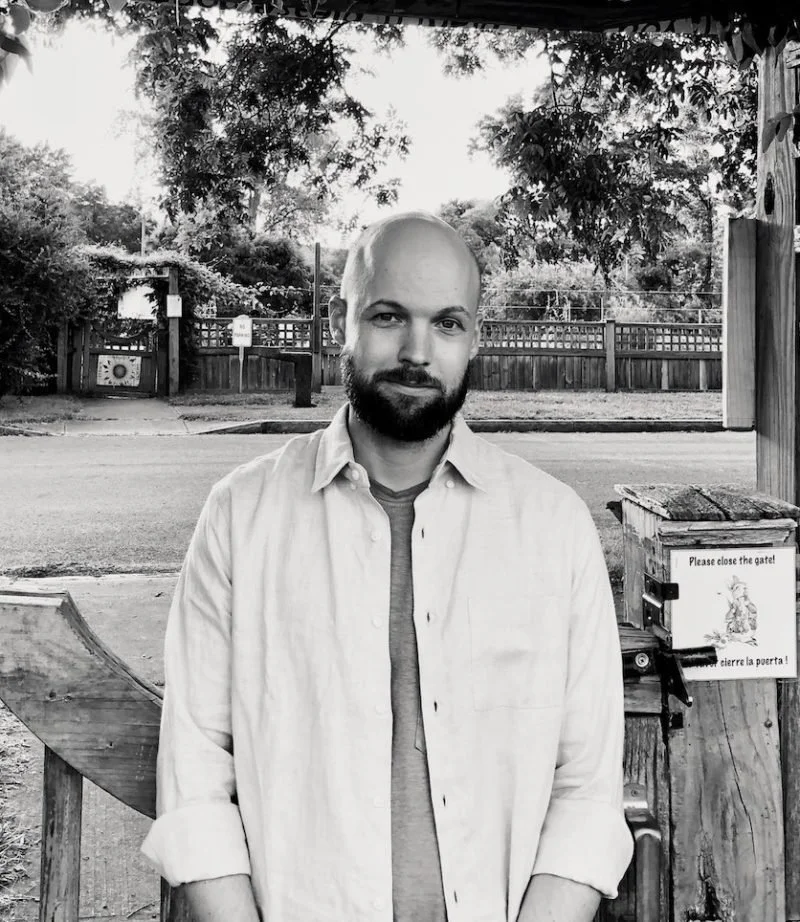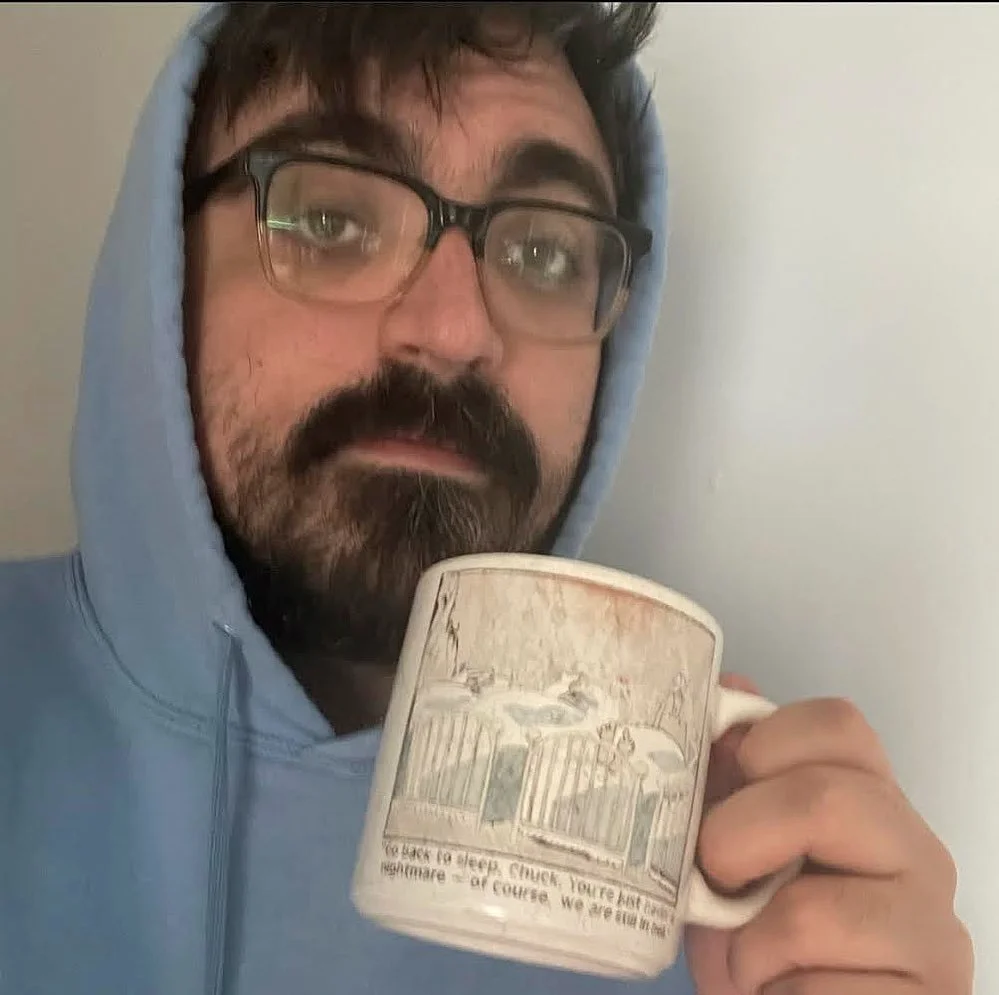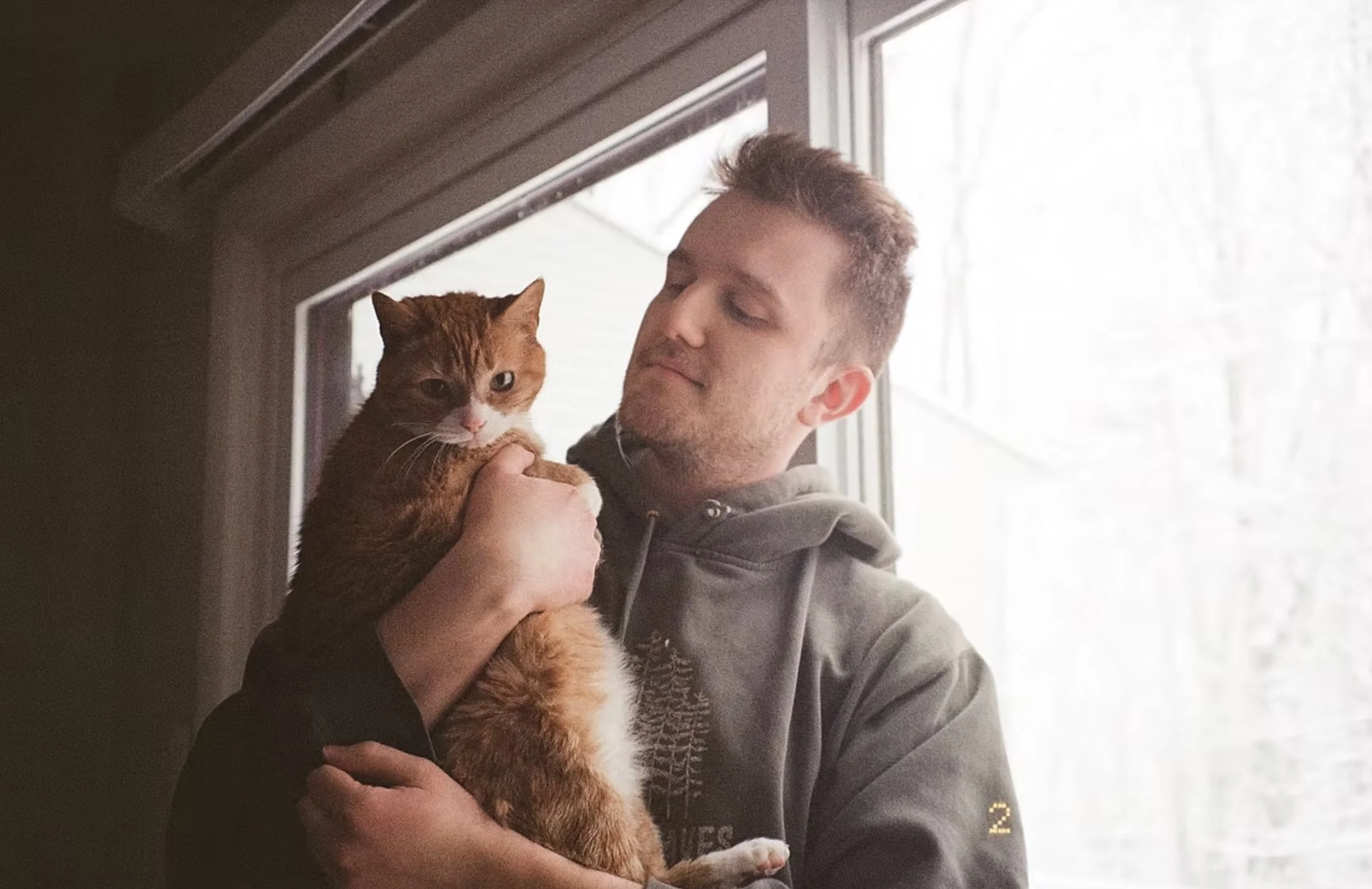
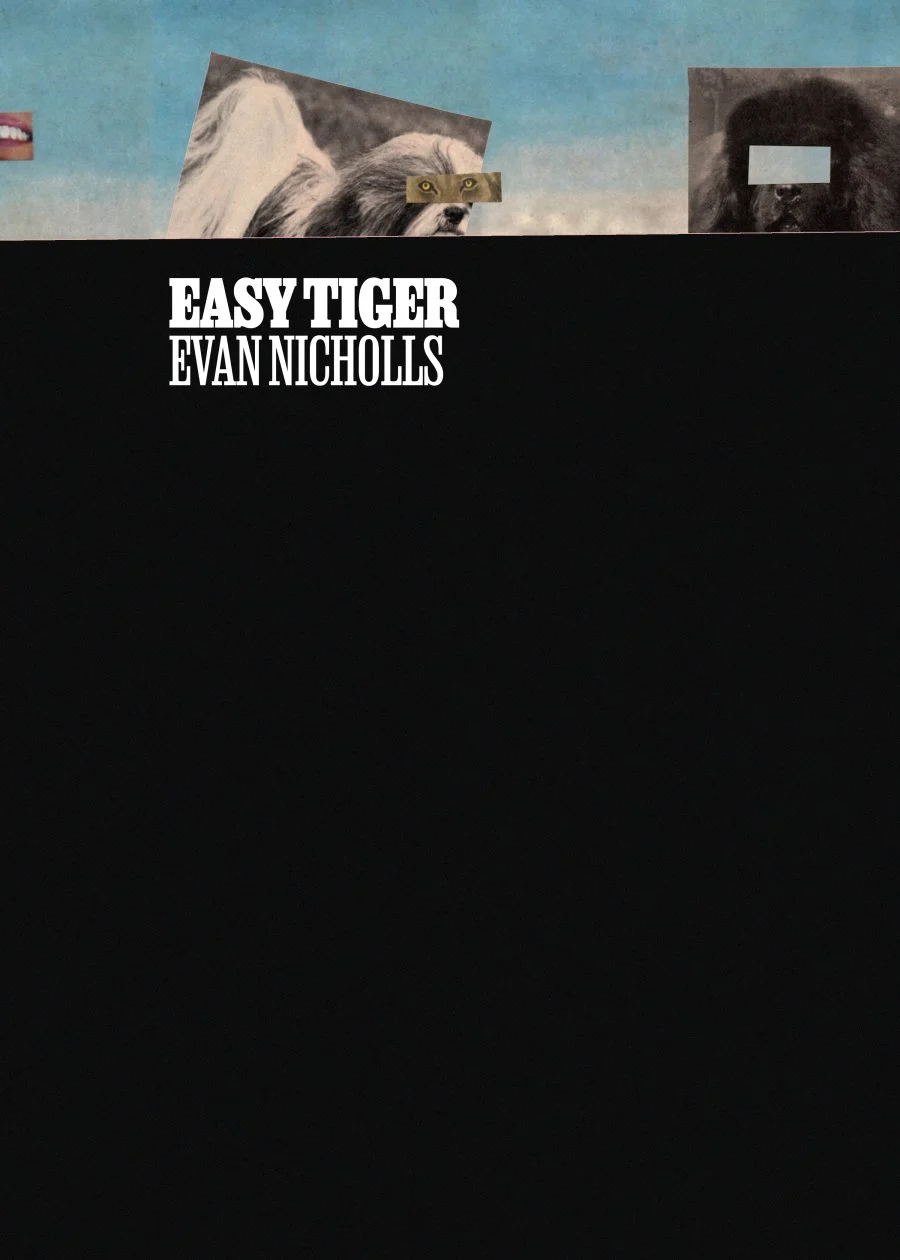
Evan Nicholls is one of my favorite writers and favorite collage artists and favorite people. He writes oddball yet cozy poems and places them right next to dazzling yet minimalist collages. Every page within his two books (2025’s Easy Tiger with Future Tense Books and 2021’s Holy Smokes with Ghost City Press) is a masterclass in brevity and concision. In a blurb for Holy Smokes, I defined the book as “a multimedia parade of nature and beast and beating heart” and I still stand by that. His two collections are hybrid displays unlike any other. Fabulist, hallucinatory, funny, and packed with a sincere empathy. Books where you're not sure if you should be chuckling or growing teary-eyed. I recommend you do both.
Following the launch of Easy Tiger last summer and our collaborative Zoom reading, I finally sent Mr. Nicholls some questions, where I asked about poetry, collage, the intersection of the two, and his overall approach to art. And craft. And arts and crafts.
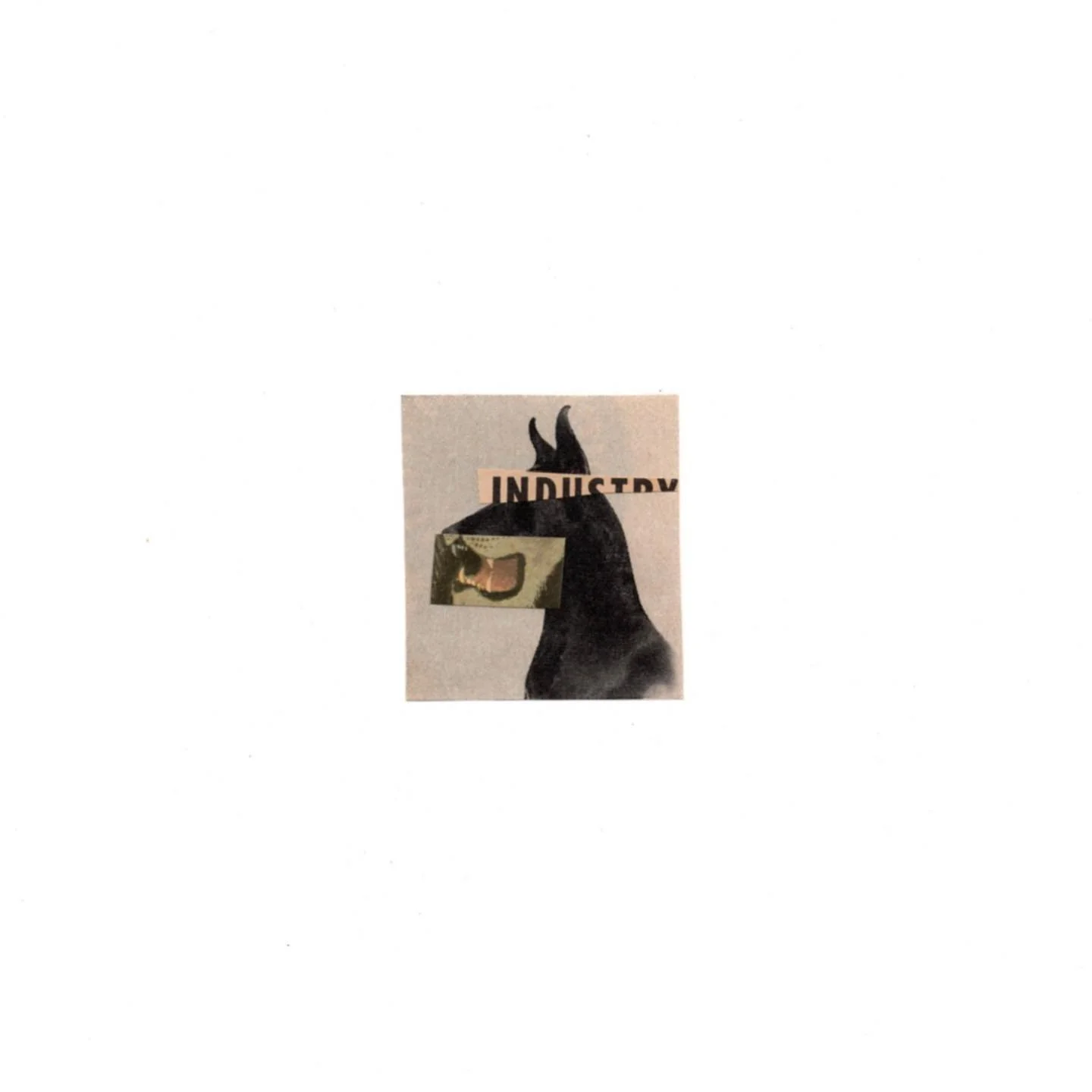
Easy Tiger has escaped its cage and is out in the world! A lovely mixture of brief poems and minimalist collages. Can you talk about the process of writing and assembling this book?
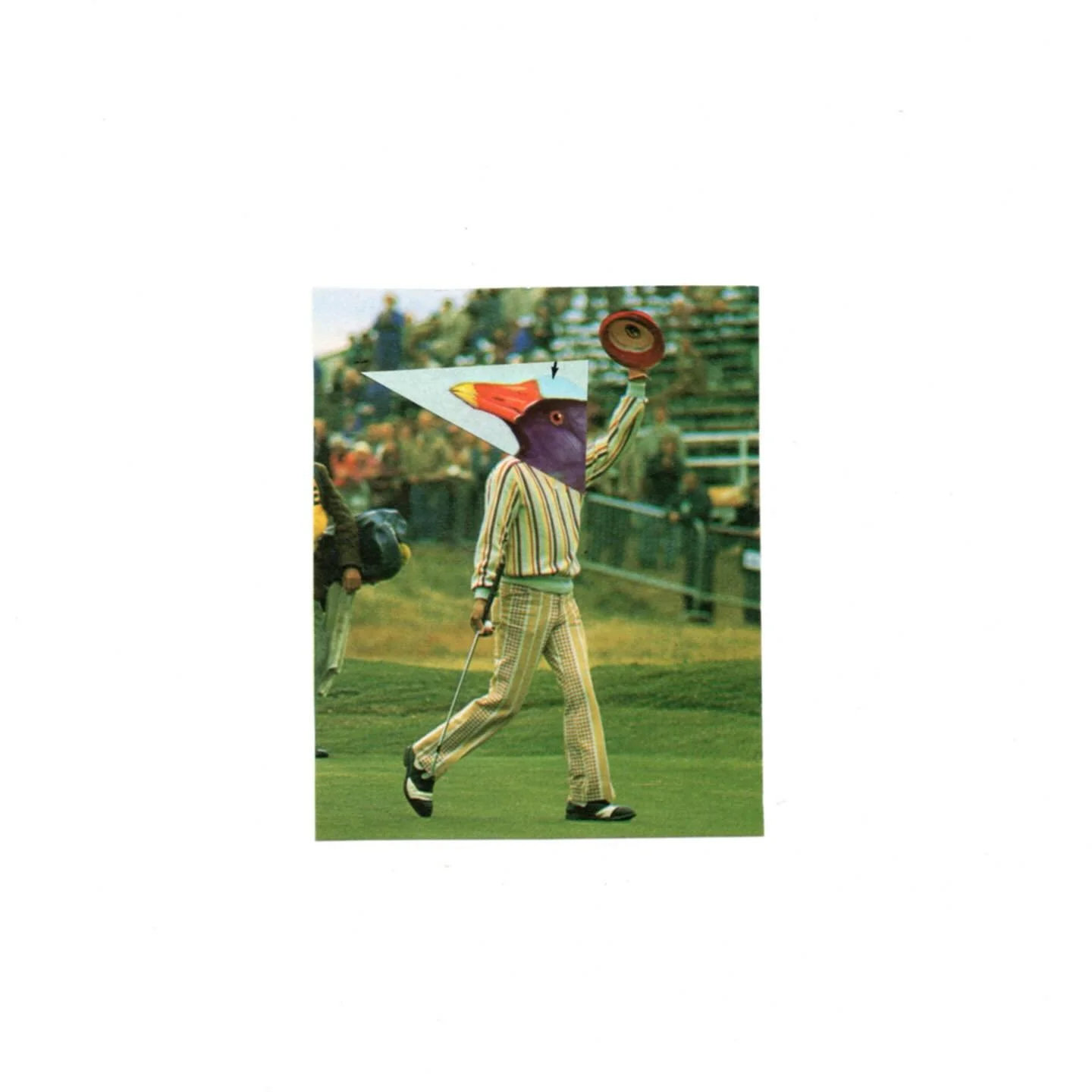
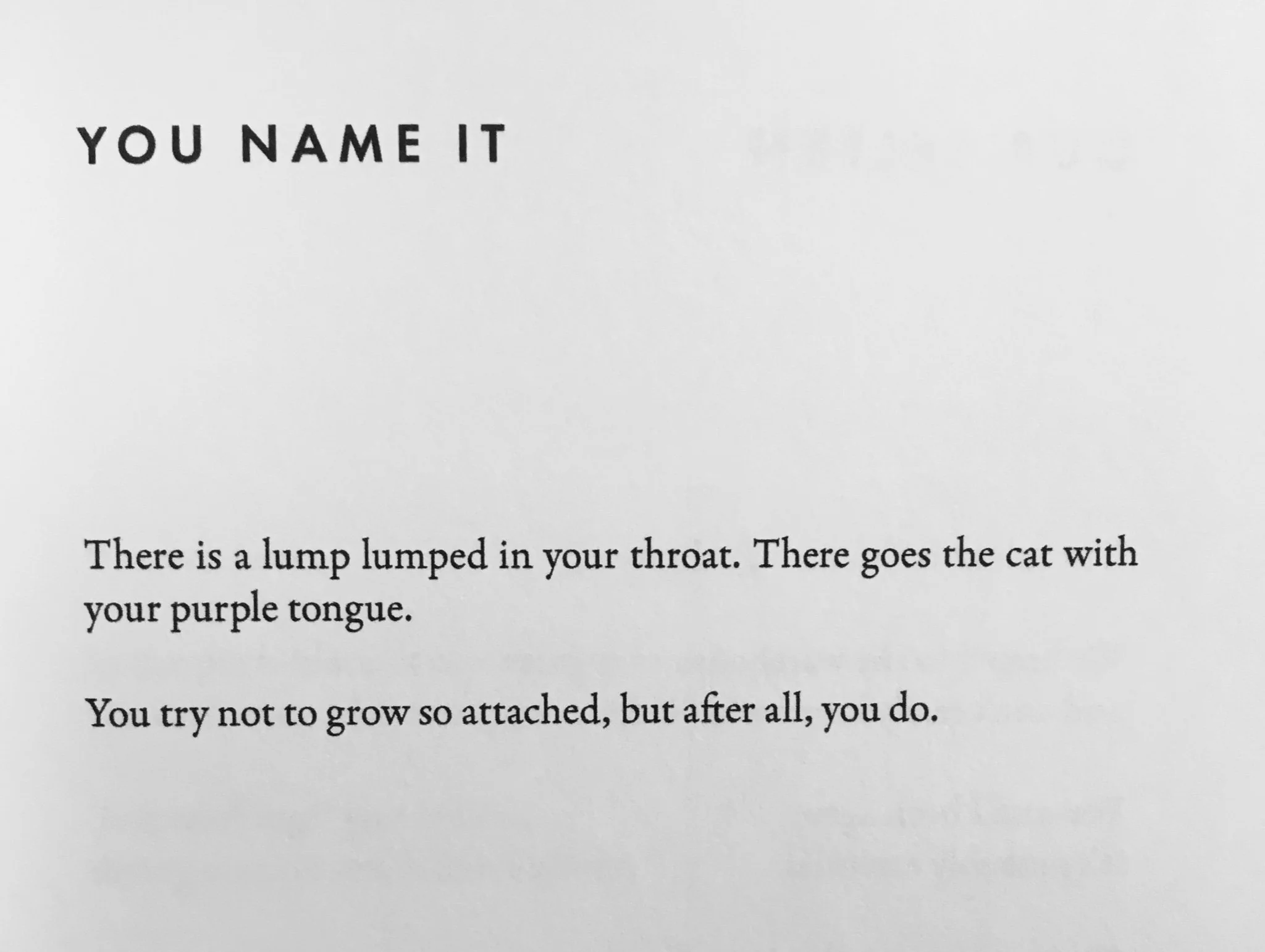
Easy Tiger is the most fun I’ve had writing. I guess the book really started from a few ideas I had for sayings and turns of phrase as titles. I liked the folksiness of that, and I almost always start with a title when I write. So, I had some ideas for working titles and what became final titles. The book’s titular poem was one of the earliest pieces. And then I just started doing different iterations of this practice—sayings or phrases with a word twisted, a letter switched. ‘West of Vipers’ instead of ‘nest of vipers’ and ‘Many Hands Make Flight Work’ instead of ‘many hands make light work.’ I loved the surreal potential of these changes. Like a jewel thief in reverse. Not all of the poems in the book were written this way, but the process informed a lot of the motive, mood and humor of the project. It was fun, which is mostly what I want when I make something. If I go back further, I think I also owe this process to my collage practice. I make analog collage, so I only use physical media. I love old print text and fonts, and I’m pretty specific about what I like when it comes to textual elements. But I almost always include a borrowed title in my collages. The material names the work. So my collage practice really bled into the DNA of Easy Tiger from the get.
Your previous book, Holy Smokes, was also made up of poems and collage work. How do you see these two books next to each other? A continuation of your practice? Kindred spirits? Siblings? Sequels? Totally different beasts?
First cousins once removed. You know your cousin who’s really your parent’s cousin and feels more like an uncle or aunt? Holy Smokes laid the groundwork for my understanding of how my collage relates to my writing and vice versa. Easy Tiger is definitely a continuation in that way. But Easy Tiger also feels truer to me now. And of course it does. I’m older and naturally a different person. Which is not to say that Holy Smokes is unlike me. Kevin Bertolero at Ghost City Press was super kind and great to work with, and I like what we put out. But a lot can happen in five years. Pandemic. I had a chihuahua back then. Now I have slightly worse knees and I’m an uncle myself.
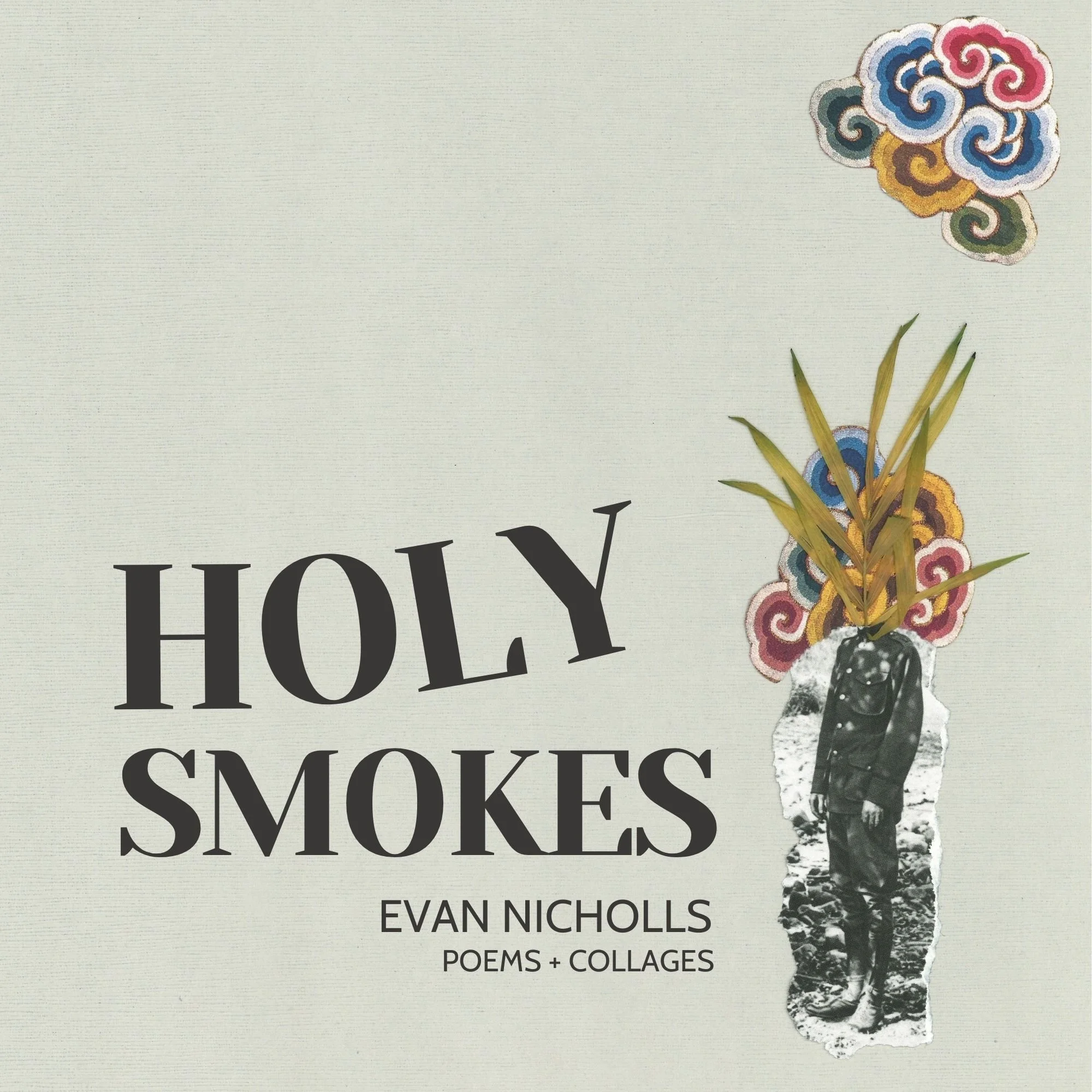
Holy Smokes contains collage art in the middle of the collection, almost like a commercial break or interlude, while the collages are scattered throughout the entirety of Easy Tiger. I'm not sure which effect I prefer, but both are such refreshing approaches to poetry collections, where it's 99% nothing but text. I guess this is less of a question and more of a comment.
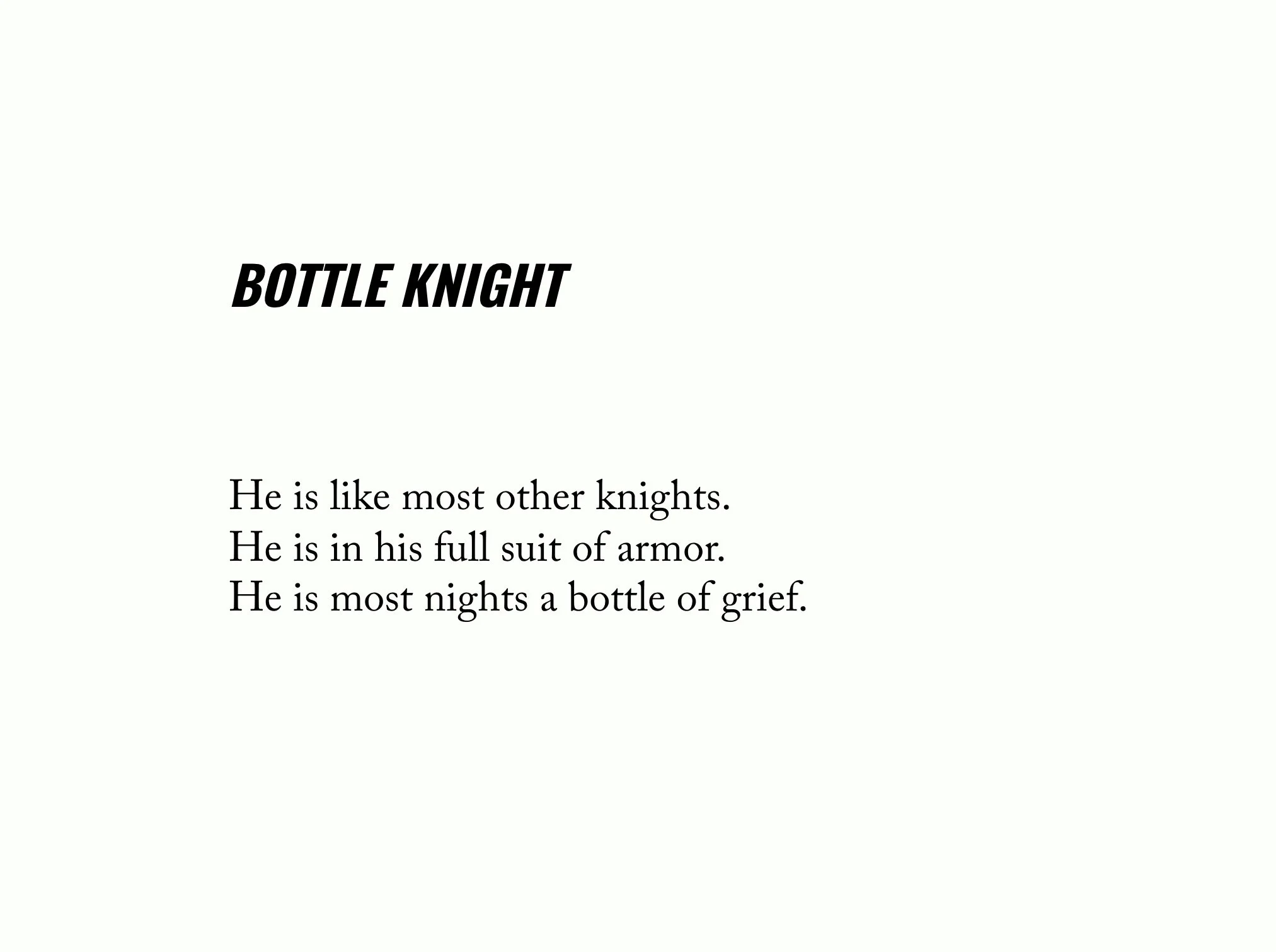
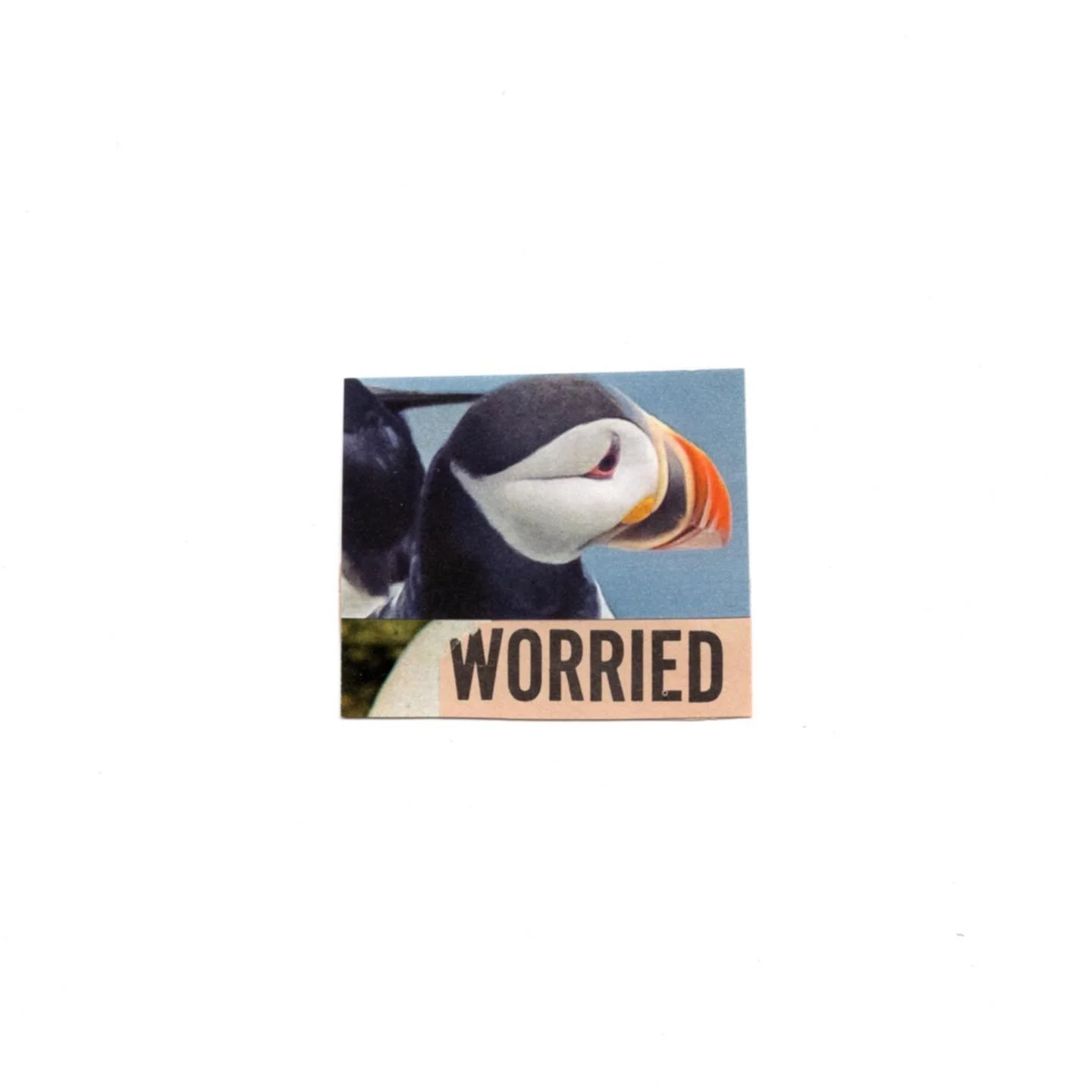
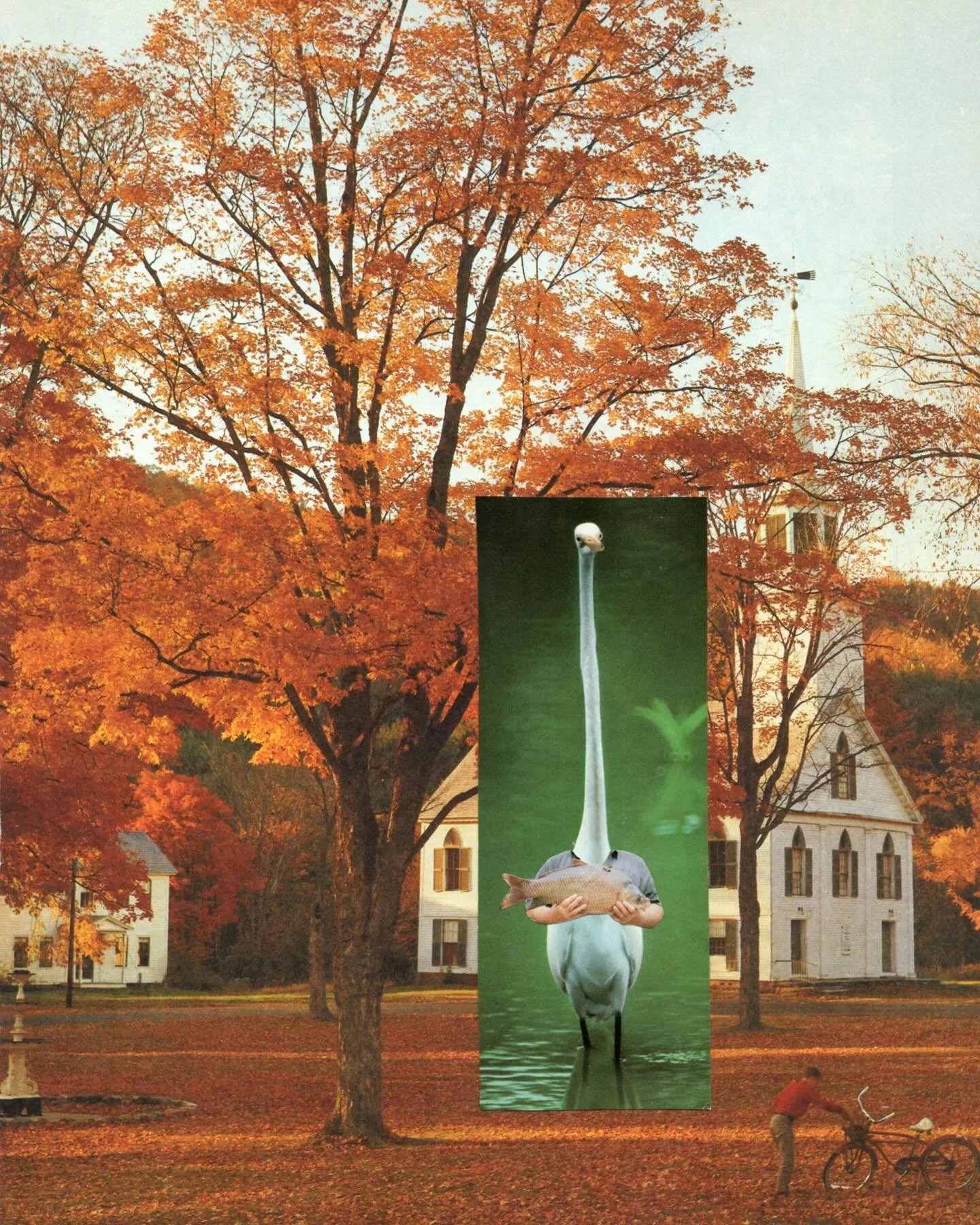
We played a lot with how the collages appear in Easy Tiger. It was important to me that the poems and collages existed on the same plane, especially because they were concerned with similar ideas and values, like brevity and the surreal-absurd. For me, scattering the collages throughout the book both feathers and erodes the line between the written and the visual. Hopefully in an interesting way.
When I was assembling Easy Tiger, I also liked the idea of putting a sort of factory setting on when it came to the lineup. Of course that’s an illusion, because there was a lot of thought put into the order of things. But there was something really funny to me about the idea of the works appearing to the reader as if on a conveyor belt. It’s ridiculous. Because what kind of proper capitalist hell would actually dedicate the resources of a factory to commodifying my little poems and scraps of paper. I also liked the absurdity of value creation within a book of poetry. As in, ‘Hey, you bought my book, you didn't like the poems but at least there’s pictures.’ How stupid and funny is that? I’m not sure how much the project actually entertains or represents these ideas as a final product, but they were kicking around my head as I was making the book. I believe I mentioned this to Kevin at Future Tense when we first talked about publishing Easy Tiger. He chuckled.
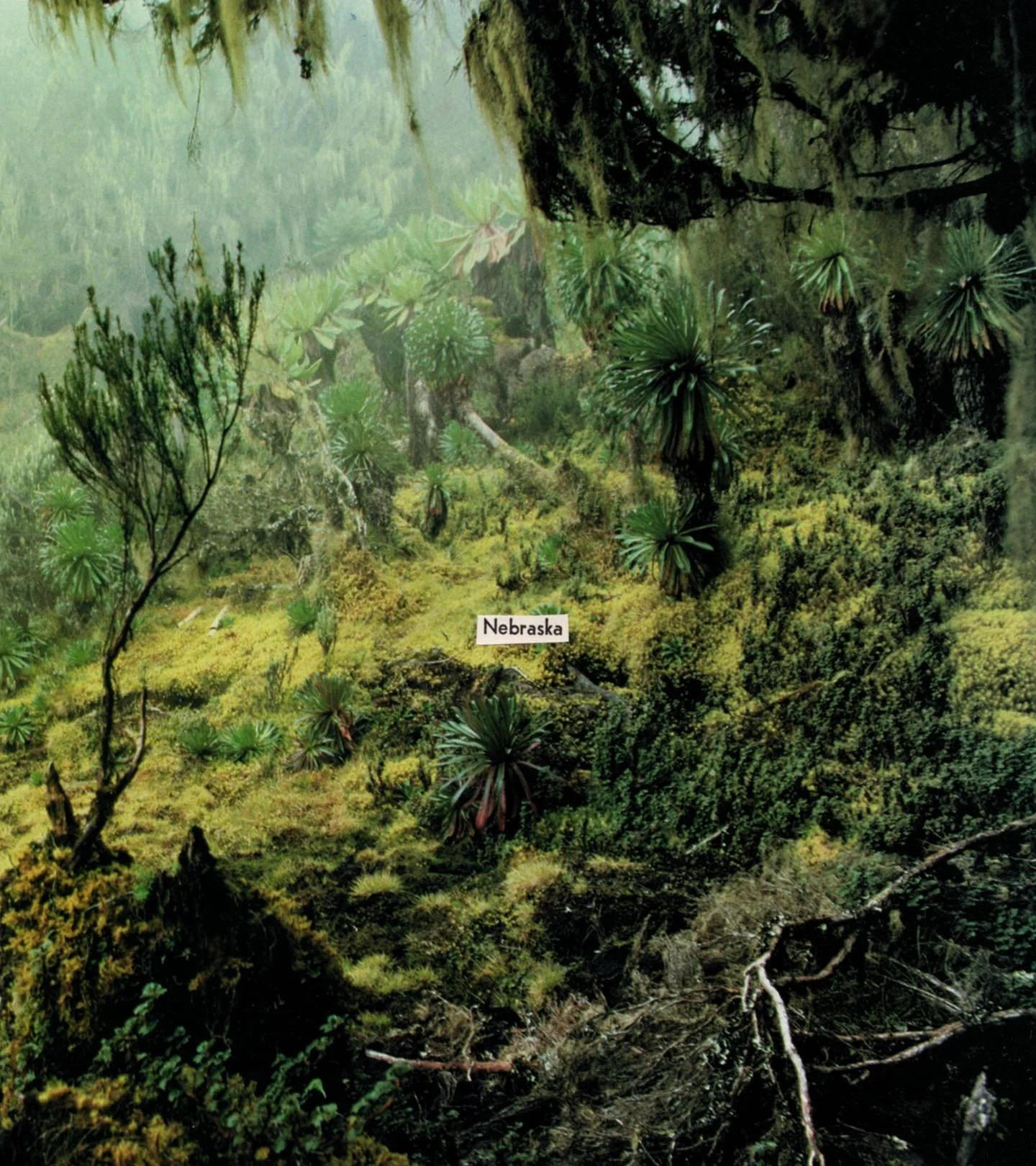
With that in mind, how do you divide time between collage art and writing poems? Does one take up more of your free time than the other?
My writing and collage practices really slingshot between and into each other. There’s a lot of synergy, and I don’t force one or the other to happen. If I exhaust my writing brain, I reach for the scissors and glue, and vice versa. At present, I probably collage more than I write. But I take a lot of comfort in knowing how much I have historically oscillated between the two, and how much they feed each other with ideas.
I'm still reflecting on your virtual book launch with Mark Leidner, Vik Shirley, Kiik Araki-Kawaguchi, and Gary Barwin. A who's who of poetry, really. These authors also blurbed your collection. It's difficult to find poetry that incorporates humor, but all of these writers do it really well. Is this an element you look for when reading the work of others?
Well, firstly, thanks for organizing the whole thing. The virtual book launch was so affirming and fun. I love the work of all those writers a great deal, so the fact that they blurbed the book and read alongside me means the world. And they’re all so quick and brilliant. Gary is hilarious—at the launch, he read a poem he wrote using only titles from Easy Tiger. Mark’s Opaque Hourglass is one of the few Substacks I open every single time because I always laugh. Vik makes even corpses deadpan. Kiik’s new book with Piżama is at once both eerie and a hoot. And of course Zachary Schomburg, who blurbed the book but could not make the reading, writes work that is at times so silly yet so shrewd and so terse.
I definitely gravitate toward humor and absurdity as a reader and viewer. I’d like to have a bigger, deeper answer than ‘it is fun,’ but that is honestly part of it. I think I also come from a sharply funny family where I’m not even especially the funny one. My mom is funny, my brothers are funny, so I’m sure that is part of the gravitational pull. That is maybe also partly why I like poetry, which takes a lot of creative intuition, and an appreciation for rule-bending and even crassness, tools also required for humor. Both also require a non-zero amount of grace. And I find that humor in poetry is mostly sharp and smart even when it’s dumb at face. Chaucer loved farts.
Has humor always been important to your own writing?
It grows in importance the more I write. I’m not necessarily trying to be especially humorous in my writing, but I find it is a recurring element. But humor is never really the end goal, I guess. I am writing from who and where I am, and sometimes that may elicit a snort. But I will say I have always loved how humor punctuates other feelings, and the stakes.
How did you first get linked with Kevin Sampsell and Future Tense Books? Since Kevin is also a writer and collage artist, this feels like a match made in heaven.
It really has been a great match. Kevin is an indie publishing vet and is in general really receptive to ideas and very thoughtful and just lives and breathes making books. I think I first connected with him in 2020, when I submitted an early version of Holy Smokes to Future Tense’s Scout Book Series. That version did not even have collages yet. Kevin had some really encouraging things to say about the manuscript but it was ultimately a no. But he recommended some names of people who could be interested, and I always remembered the generosity of his response. And then I found out he was an analog collage artist, too, so I asked him about his collage work and we mailed each other some materials. That was really fun. After that, we were following each other on socials, and when he published I Made an Accident with Clash Books, I messaged him to say congrats and ask how he pitched the book, because I was also working on a book of poems and collages. He asked to see my book and the rest is history.
What are some touchstone books (or touchstone authors) that captivated you and helped you early on in your writing career and/or your collage process?
CivilWarLand in Bad Decline by George Saunders is a touchstone, Pastoralia by George Saunders is a touchstone. Really anything by George Saunders. I think he’s one of the first authors I started really reading seriously outside of a syllabus. Native Speaker by Chang Rae Lee is one of my favorite novels. Redwall by Brian Jacques is a super early touchstone for my relationship to writing—I loved the Redwall series as a kid, especially Salamandastron and The Long Patrol. But prose poems are what really got me into writing poetry seriously. So Russell Edson. Joel Brouwer’s Centuries. Feelings Above Sea Level by Shang Qin and Hotel Almighty by Sarah J Sloat are two more books I hold close.
Although your latest collection is still in its infancy, have you written anything since? Have you made any collages since?
My girlfriend’s name starts with a ‘T’ so lately I’ve been making ‘T Bird’ collages for her. They’re birds with funny elements and themes and the letter ‘T’ appearing in some capacity. They’re completely unserious, which I like. The latest one is murder-mystery themed, probably because we watched Wake Up Dead Man.
I have not written anything recently, but I’m working on getting back into that headspace. Not forcing it, of course, but waiting and watching for some fluttery movement in the treeline.
Outside of your own work, what are some recent reads that you have enjoyed?
I'm currently reading The Organs of Sense by Adam Ehrlich Sachs, which I really like. But I actually have a lot of trouble being a voracious reader, which is probably why I love the digestibility of prose poetry so much. Prose poems can pack so much goodness in such a small space. I also love films for similar reasons. I did go to a collage symposium in Montreal with Kolaj Institute back in October, though, and I grabbed a bunch of books from my co-presenters through that. One of my favorites was Tree of Life by William Davies King. He’s a playwright and collage artist and ‘collector of nothing,’ and the book is about his cereal box collection. It’s incredible, and hilarious. My favorite collage in the book is on a box of Urkel-Os.
I'll ask the same question, but in regards to recent movies and/or music. What are some recently watched films or recently listened to albums that you'd recommend?
This past year has actually been a big music year for me. Now, that is not saying a lot—I had kind of altogether stopped exploring music for a while and don’t listen to much in the grand scheme of things. But I had more time in the car in 2025, which was a good way to start again. MJ Lenderman, Pavement, Thao, The Tragically Hip, Mei Semones, and Dinosaur Jr. are probably the most frequent names in my rotation right now. And always Neil Young. I also like a good podcast and consume a lot of Dropout and Dimension 20, especially while I cook.
As far as films and television go, like I said, I recently watched Wake Up Dead Man, which was great. I love a murder mystery—in that same vein, The Residence was a really good time. I’ve been revisiting a lot of Wes Anderson after seeing The Phoenecian Scheme, too—so Moonrise Kingdom, The Royal Tenenbaums. I have so many things on my watchlist, actually, so this is a good reminder to get back to it.
If you can, provide a photo of your writing workspace or describe with words. What are some essentials while you create?
When I’m writing or collaging, I often have an iced coffee or a wine or a beer, but it’s not essential. I have a desk in the spare bedroom currently, and we keep it relatively clear as a zone for different art projects. Or at least that’s the idea, we only recently got it set up. The desk has a large 18 x 24 Fiskars mat on it, which is great for collage or sewing or whatever else you want to do making-wise. I also have a smaller self-healing X-Acto mat that I got as a gift for my collage practice years ago. It’s probably one of the best gifts I’ve ever received. That and my portable scanner. Both of those items travel around the house with me, depending on how I’m doing things that day. Historically, I’ve done a lot of my collaging on dining room tables. But this desk is a nice setup so far. The desk also has a thick glass cup—which holds my scissors, glue, X-Acto knives, etc.—and a small piece of folk art we picked up at a roadside flea market in Maine. Two wooden cats on a red and black seesaw with a fish and a heart painted on the base. It’s fun to look at.
For this ongoing author interview series, I'm asking for everyone to present a writing prompt. It can be as abstract or as concrete as you choose.
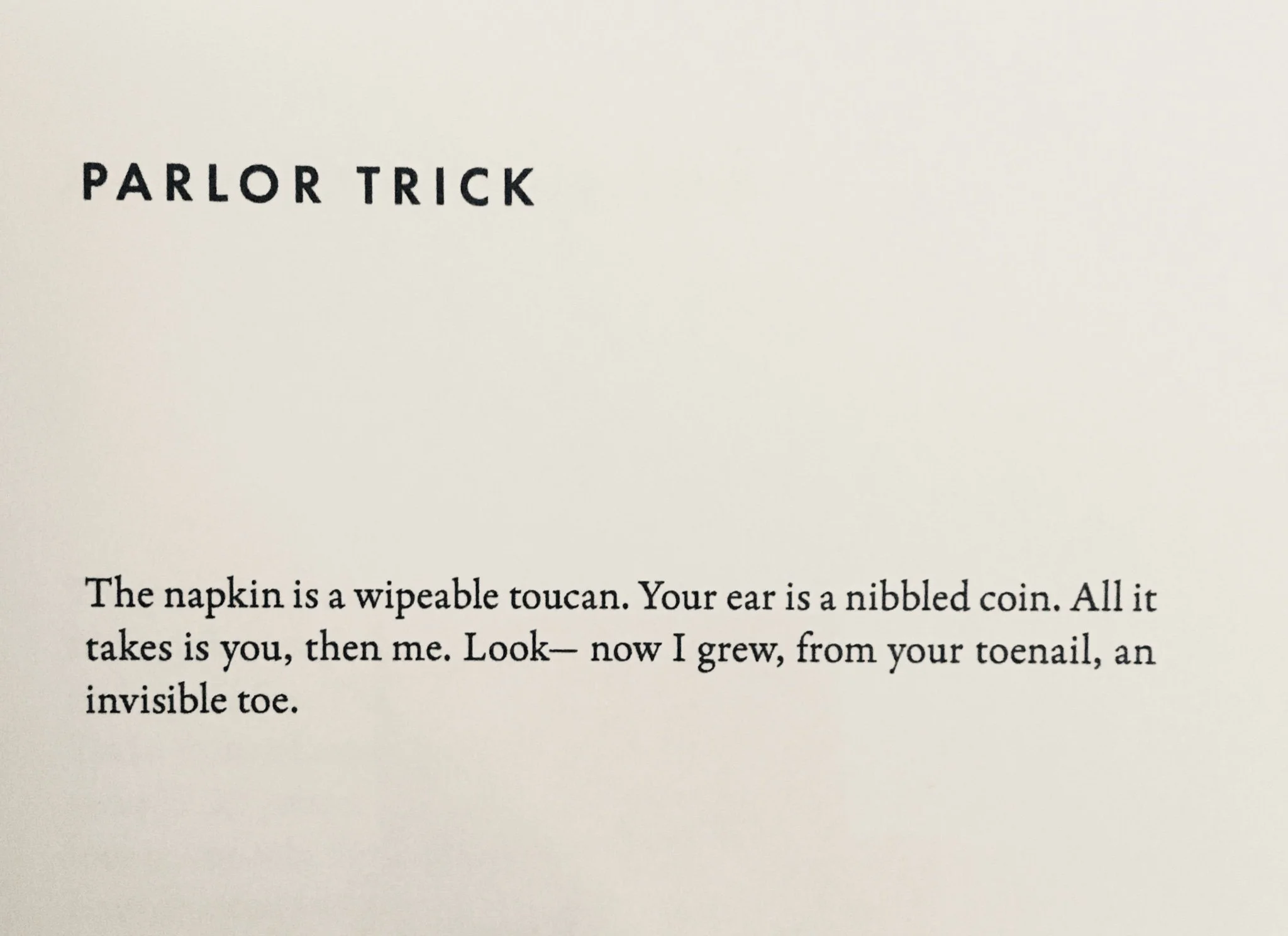
How about we dust off one I shared with you and Evan Williams a few years ago? It gave me one of the poems in Easy Tiger.
Think of a profession or role. Birder, arsonist, baby. Then think of an article of clothing. Suspenders, bib, chinos. Now put them together. This is the title of your poem. Start from there.
In closing, do you have any advice for early writers or visual artists? Or rather, what's something that keeps you returning to your preferred mediums?
Take notes, and remember no one is watching you take notes. Write whatever. A visual you saw or thought of. Something someone said or a version of what they said. Most of it will be only mildly interesting, and it does not have to be anymore than that. Notes do not have to make sense. Get a working list going.
Here are a few actual notes from my personal list: pigeon with a pickaxe; real mall santa; seeing-eye bulldog; river rat; Dieseldale; fucking sad; it’s all over for Jesus Fish; largesse; police sketch ‘he had huge hairy nuts’; llama burger; compliments bucket; person you are; blue trebuchet; with a sword; quest; purple truck.
My list goes all the way back to probably 2017, and it’s full of unusable trash. All of it is gold. I find my notes only have to be important enough to me in the moment of writing them down. Writing them down is maybe the most useful part, because it means you are breaking a barrier, turning a wheel, flipping a lever, by physically doing the act. Whatever poem or piece of art comes from ‘pigeon with a pickaxe’ is gravy, and unpromised.
Any final thoughts / closing wisdom / something I might have missed that you'd like to include? Thank you again for taking the time!
Thank you, Ben!
If you’re someone reading this and you’re interested in grabbing a copy of Easy Tiger, I have copies to buy via DMs or you can grab a copy from Asterism or Future Tense directly. You can follow me on Instagram at @evancollage and Future Tense at @futuretensebooks. Future Tense also has plenty of incredible titles to pick from. If you buy Easy Tiger, thank you—I hope you like the book, and if not at least there’s pictures.
Oh, and a final thought. If you’re a writer or an artist, go make friends. Creative friends. They are some of your greatest resources, and you can be one of theirs. Ben here is one of many pals who has added to my craft and life along the way. Cheers!